
In Shanghai’s Old City, Yu Garden is ready to usher in the year of the Red Fire Horse. Visit this classical Chinese garden oasis during our New! China’s Imperial Cities, Natural Splendor & Modern Marvels adventure.
In Shanghai’s Old City, Yu Garden is ready to usher in the year of the Red Fire Horse. Visit this classical Chinese garden oasis during our New! China’s Imperial Cities, Natural Splendor & Modern Marvels adventure.
New Year’s celebrations may be over a month behind us in the western world, but the activities for the Chinese Lunar New Year have just begun. The 16-day festival commenced on the night of February 16th and now each day that follows has its own distinct theme. On the final night, just over a week from now, adults and children will step out of their homes as the Lantern Festival caps off an exciting period of renewal and gratitude. It will be an evening of lights, dragons, and community. At the ripe age of over 3,000 years old, this celebration was just added to the prestigious UNESCO Intangible Cultural Heritage of Humanity list. Its first mention can be found during the Han Dynasty, which was also the period that marked the creation of paper and enhanced use of sundials. Great timing to write it down!
Family comes first
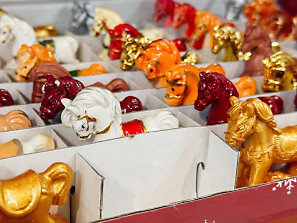
Family members might exchange commemorative trinkets during the first week of festivities.
This Lunar New Year starts off strong on the first night with a traditional family reunion and dinner that marks the last day of the previous year. Like many celebrations in the U.S., festivities include a grand meal and staying up until midnight. As the new year begins, the emphasis on family continues. The next few days are all about connection and generosity, which is encouraged between spouses, siblings, and relatives. Time is also set aside to pay respect to ancestors and visit their resting place. More traditions continue to line up the itinerary through the week, including a day of rest and games, days for offerings and prayers, and even a special day where fathers celebrate their son-in-law (thanks Dad!).
Light ‘em up!
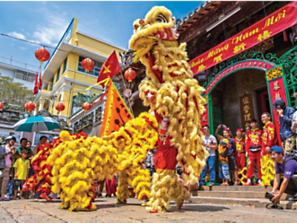
The dragon dance is a highlight of the Lantern Festival.
The penultimate three days are then reserved for the preparation of the magical Lantern Festival. Families will spend the hours cooking customary food and carefully designing the distinct round red lanterns as the final night approaches. Many of the lanterns will be adorned with different colors, designs, and sometimes riddles for children to solve. Dancers and performers will prepare to portray lions and dragons or even walk through the crowds on stilts. And, finally, when the sun sets and the stars take over, the picturesque scene of floating lanterns decorating the sky and entertainment in the street marks the final step into the new year.
Calling all equestrian fans
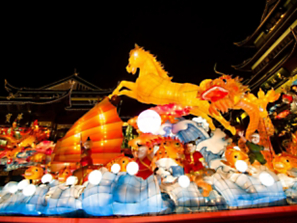
In 2014, China welcomed the Year of the Wood Horse.
This year, however, the fiery energy from the dragons and the red glow of lanterns that highlight the festival is all but lost. 2026 marks the year of the Red Fire Horse. The Chinese Zodiac Calendar follows 12 animals that each represent different characteristics and have a stark importance on astrological predictions. Each animal represents a different year over a 12-year cycle, and then is combined with an element, either wood, fire, water, earth, or metal, which makes for a 60-year cycle to fully come back around. As it happens, this Red Fire Horse has not been seen since 1966. A few things have happened since then, so it might need to be brought up to speed.
Horses in history
In Chinese culture, the horse is a symbol of freedom and nobility. From day-to-day farming to clashes on the battlefield, the powerful animal was a key part of their society. Archaeologists even uncovered a 2000-year-old tomb in northwest China that belonged to two horses. During the fourth century, horseback riding became increasingly popular in warfare. Quick and light calvary were an instrumental tool that gave way to the rise of Qin dynasty, China’s first imperial dynasty. The emphasis on horses didn’t change over the next several centuries, as the military created specialized farms where they were bred and trained specifically for battle. They continued to be an integral part of society up until the end of Qing Industry where industrialization and more modern forms of labor took the helm.
Getting to know your neigh-bors
The Horse and those who are born in its year, as found in the Chinese Zodiac, are known for a variety of traits. With many similarities to the cultural perspective of a stallion, the Horse brings energy, enthusiasm, and a strong will. It also can be described as moody, swift, and even carrying a touch of whimsy. This year, its unique personality is combined with the hot intensity of the fire element. After a year with the relatively tame Wood Snake, things are about to be ramped up. For many, this could be an era of revolutionary transformation. 1966 saw a world of bravery and change, with voices like the Black Panther Party and the Women’s Liberation Movement.
Keeping the fire in check
The Red Fire Horse used to be slightly daunting for many in Chinese culture. Older anxieties warned that negative consequences could arise from its erratic and intense nature. Parents would think carefully about the name of a child born during this year and look to find something that communicated resilience and stability to balance the rambunctious energy that the year may bring. However, many born under this animal are valued for their abilities as risk-takers. They’re known to be pioneers who aren’t afraid to take a step into the unknown. The fiery spirit bodes quite well for artists, entrepreneurs, and leaders.
Gallop into the New Year!
In the Chinese Zodiac, there’s a personalized horoscope for each sign based on how well it interacts with the Red Fire Horse. For those born under the Rat and the Snake, who don’t necessarily get along well with the Horse, this could be more of challenging period where patience and deliberation are encouraged. On the other hand, the Tiger and the Dog may benefit from a bountiful year of fortune and excitement. And the luckiest ones, those born under the Horse, are looking at a perfect opportunity to blossom and thrive. No matter where you fall in the Chinese Zodiac, the Horse represents a fast-paced time of uncertainty and challenges, albeit progress. So, whether it’s more of the speed or more of the whimsy that shows itself in your day-to-day life, a few doors are bound to be open for you.
Discover how the Chinese Zodiac influences local beliefs and traditions during our New! China’s Imperial Cities, Natural Splendor & Modern Marvels adventure.
Lucky Charms: Symbolism in Chinese Culture
Discover the myriad signs of luck and prosperity with ancient roots in China.
Stone Dragons and Concrete Giants: China's Two "Great Walls"
China's ancient Great Wall kept invaders out for centuries, but can its modern counterpart—the Three Gorges Dam—keep the Yangtze River in check?
Comfort in a Cup: Global Tea Rituals
From Chinese tea rituals to Indian chai, tea is a universal sign of companionship, connection, and comfort.
Get The Inside Scoop On...
Like what you see here? Receive weekly updates right in your inbox.
inside-scoopArticles In This Edition

Dig Deeper: 10 Lesser-Known Favorites for Curious Travelers

Function Over Fashion

Horse Power

Scotland’s Fabled Fauna: Bovines and Equines

Teatime in the Cemetery of Dragons

Welcome to 2026, Again! Fiery Foretelling and Chinese Lunar New Year