
With their distinctive flowing locks, Highland cattle stay warm during the blustery and cold winter months of Scotland. Visit with them during Scotland Revealed: Legends, Lochs & Highland Landscapes.
With their distinctive flowing locks, Highland cattle stay warm during the blustery and cold winter months of Scotland. Visit with them during Scotland Revealed: Legends, Lochs & Highland Landscapes.
By Bob Brady, 26-time traveler from Braintree, MA
O.A.T.’s Scotland Revealed trip provides the traveler with a grand exposure to the land’s rich history and culture and to its welcoming people. For those of us also possessing a desire to view the unique species that populate the region, this trek delivered a trove of checkoffs to our respective bucket lists.
Coos and Belties
Perhaps the most iconic of Scotland’s creatures is the Highland Cow, referred to by the locals in the old English tongue as a "Heilan Coo." This species of cattle possesses an impressive set of long horns and a distinctive shaggy reddish coat. A mature "coo" exceeds one thousand pounds and a bull, nearly twice that. While large in stature, the breed generally is docile and can be found grazing throughout the countryside as it has done for hundreds of years. Their distinctive appearance reflects an adaptation to the harsh climate of the Highlands and Outer Hebrides islands where they originated.
Our first close encounter occurred as we observed a number of cars that had stopped along the road to view a gathering of the cattle in a field. It reminded some of us of a similar experience in our national parks back home when a popular animal is sighted. A plea to our Trip Experience Leader and driver led to us joining the coo watchers. One huge animal had decided to rest close to the road and proved to be the star attraction for photographers. Calving had occurred recently and a three-month old also came within viewing range.
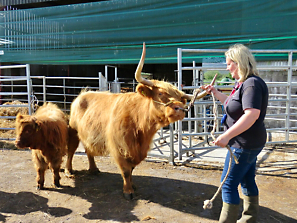
During a visit to a family-run Highland "coo" farm, Bob’s small group got to see the adorable animals up close.
A scheduled itinerary stop led us to the family farm of Grace Noble in Banchory, Aberdeenshire. There, she invited us to "join her herd" of Highland cattle with up close viewing as well as an opportunity to have a "hands on" experience. Although engaged in beef production, Grace also raises coos to display and for educational purposes. Through her constant interaction with them, these massive bovines become accustomed to human contact and especially enjoy having their shaggy hair brushed. We each welcomed the opportunity to comb a mother and her calf during our stay.
Another Scottish breed of cattle that we encountered on a random drop-in along the way has an appearance that draws comparisons to an Oreo cookie. The Belted Galloway features a white band that wraps around the midsection of its otherwise black/brown body. Hornless, "Belties" are beef cattle rather than milking cows. As with other Scottish Highland animals, this distinctive breed is well acclimated to the harsh weather conditions where it resides.
Ponies and Kelpies
Just as high on the list of "must see" Scottish critters is the Shetland pony. Its origin traces back to the Bronze Age and to the Shetland Isles in the north of Scotland. Compact (42 inches in stature and approximately 400 pounds in weight) and strong, the pony possesses a thick coat and a flowing mane and tail. Like the highland coo, the Shetland pony inherited its hardy stock from its residency in a stark climate with its scarce food supply. Originally used as a working animal to pull carts, plow fields and haul coal in pit mine, the diminutive equine now largely is kept as a pet.
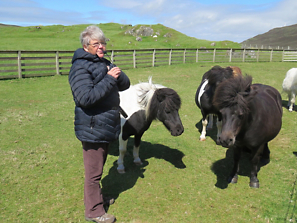
Small, yet mighty, with a beautiful coat, Shetland ponies have remained a favorite horse breed for centuries.
Our initial viewing happened on the first day of the Shetland post trip in a field outside of Lerwick, the island’s largest town. Like that of the highland cow, the chance meeting resulted in pleas to halt the van after spotting several of the miniature animals grazing along the road. As we headed toward a fence, so too did the ponies to greet us. Later, we’d have a more formal introduction at "Carol’s Shetland Ponies," a roadside attraction in Tingwall. She displayed several of her prized ponies in a corral and provided us with an informative talk. A stiff breeze further revealed the ponies’ luxurious manes.
Scottish folklore includes tales of the "Kelpie," a mythical malevolent shape-shifting aquatic creature that haunts lakes and rivers. The creature takes on the appearance of a horse on land to attract unsuspecting riders. Once a victim is lured onto its adhesive-like back, the beast carries its prey to a watery demise. Robert Burns, the famed national poet of Scotland, included the legend of the Kelpie in one of his poems.
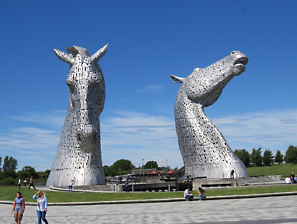
Forged from steel that glistens in the sun and moonlight, these two massive works of art are the largest public artwork in Scotland and the largest equine statue in the world.
Fortunately, the Kelpies that we saw on the trip were of the benevolent kind. We visited the Helix, a parkland in the Falkirk area of Scotland’s Central Lowlands, where we observed the largest equine statues in the world—two 100 foot Kelpie horse-headed steel sculptures weighing more than 300 tons. These representations were designed to commemorate the important historical contributions of the workhorse to Scotland’s agriculture and industry.
Meet Scotland’s favorite fauna for yourself when you join us on our Scotland Revealed: Legends, Lochs & Highland Landscapes adventure.
Beast of Kings
What country chose the unicorn—a make-believe creature— to be its real national animal?
Better Off Red
What’s the real reason why Scotland is home to so many redheads?
Where in the World?
Where in the world does the largest equine statue also depict a dangerous mythical creature?
Get The Inside Scoop On...
Like what you see here? Receive weekly updates right in your inbox.
inside-scoopArticles In This Edition

Dig Deeper: 10 Lesser-Known Favorites for Curious Travelers

Function Over Fashion

Horse Power

Scotland’s Fabled Fauna: Bovines and Equines

Teatime in the Cemetery of Dragons

Welcome to 2026, Again! Fiery Foretelling and Chinese Lunar New Year