Question: What kind of flowers do Peruvians give to their loved ones as a sign of affection on Valentine’s Day?
Answer: Orchids
Instead of sending roses to a loved one as a sign of affection, Peruvians give each other orchids, which signify love, strength, and grace. The tradition probably has more to do with the abundance of orchids grown here, but it’s also associated with an Incan myth about a princess who fell in love with a warrior from the kingdom of the Andes. After her father forbade their love (because she was destined to be wed to the Sun God), the heartbroken princess ran away and turned into a beautiful “waqanki” flower—yes, an orchid. Whenever the warrior passed by a waqanki he was reminded of his love and broke out in tears. A convenient myth, perhaps, but orchids have been recognized as a symbol of love ever since.
Not to take away from the romantic associations with Valentine’s Day, but for such an advanced civilization, the Incas had a few rather unusual customs and traditions. Let’s start with their strange notion about the nature of beauty itself.
Was their head in the clouds?—the Incas and skull deformation
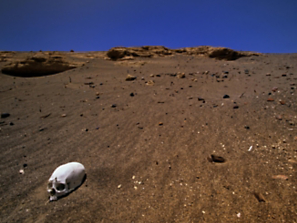
An elongated skull found at a burial site near Nazca, Peru.
Strange as it sounds, a sign of beauty in Incan culture was an elongated skull. To achieve the look they were smitten with, they used tightly wrapped cloth straps around the heads of newborns. This created pressure points that limited the growth of different parts of the skull, shaping it into a more conical form. It also had the benefit of helping to distinguish nobility from other classes in Incan society.
Colonial Spain eventually banned the practice of cranial modification late in the 16th century, but not for reasons you would think—it was primarily because the practice too visibly defied European norms of beauty.
They also liked having a few friends for dinner
Another Inca custom was stretching their earlobes, which seems rather quaint compared to other practices. While not as widespread as in the Aztec civilization, the Incas did practice cannibalism. It stemmed from their belief that eating the flesh of others gave them the deceased person’s power. They were also big on sacrificial rituals. In an annual ceremony called Capacocha, the Incas would select children from across the empire who were then sacrificed to the Sun God, Inti—either buried alive or killed outright as part of the ritual.
But when Spain conquered the mighty Inca Empire in the late 16th century, there were two things that shocked them more than anything else: one was the extreme cleanliness of Incan cities, and the other was the sexual freedom of Inca society.
What’s love got to do with it ...
When the Spanish encountered the Inca, Spain was in the grips of the Inquisition, which meant the tiniest infraction against the preaching of the Catholic Church would result in anything from humiliation to execution. So, you can imagine what they thought of Incan views about love, sex, and marriage.
Because marriages were arranged, there was no courtship in the Inca Empire. But all young women and men were already well versed in matters of sex. They were expected to have relations well before marriage—and girls were expected to lose their virginity as soon as possible. In fact, Incan parents encouraged teenage sex. Being a virgin at the time of marriage would be considered humiliating for the bride, the groom, and the entire village.
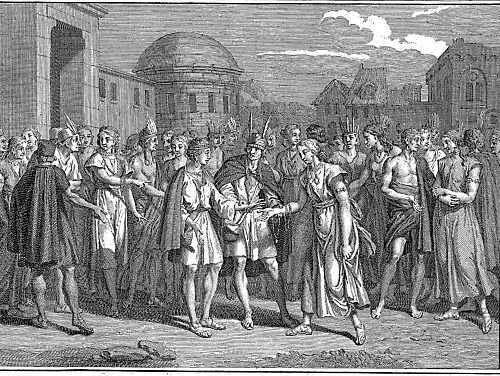
An 18th-century illustration depicting an Incan wedding ceremony.
Because they didn’t really know each other, the “trial marriage” was the time for Incan couples to see if they were sexually compatible—and a woman could decide to split from her trial husband without stigma if the relationship did not work. Trial marriages didn’t apply to Incan royalty, however. Because it was customary for the Inca King to marry his sister (to preserve the divine blood of the Sun), in that case virginity was expected.
To spice things up and get things rolling, the Incas had many effective plants, insects, and worms that were used as aphrodisiacs. They also had concoctions used to suppress the libido (anaphrodisiacs), which came in handy during military campaigns for soldiers pining for their wives.
But the fun times were over after the Spanish conquest. The Catholic Church did away with trial marriages for the Inca. Virginity was now expected of women. And sex was to take place inside a formal marriage—or not at all.
There are still mysteries about the Incas and their beliefs, culture, and customs that continue to be debated. But let’s face it, even modern civilizations vary widely in their views of romantic love. Beauty itself is something that has always been in the eye of the beholder—and not everyone gets roses—or orchids—on Valentine’s Day ...
Oddball Valentine’s Day celebrations around the world
- A sweet deal either way—On Valentine’s Day in Japan, they say it with chocolate. The object of one’s affection get “honmei choco”(true love chocolate). Friends and relatives, however, get “giri choco” (obligatory chocolate) instead.
- About those chocolates—Actually, Japan as well as South Korea have two separate days set aside for love. On February 14th, women traditionally give men chocolate, and men reciprocate a month later on “White Day.” And chocolates aren’t just given to a partner or love interest, but to work colleagues and friends (those giri choco, one assumes). Those who remain single a month after “White Day” have also been known to celebrate “Black Day,” by eating black noodles (jajangmyeon) to acknowledge their single status.
- They really ham it up in Germany—No cute heart-shaped trinkets for German couples on Valentine’s Day—they exchange pig-shaped gifts instead. Apparently, pigs are the symbol of both love and lust. But to play it safe and avoid any misunderstandings, it’s not recommended for those of us in the U.S. to give their loved one anything pig-shaped for Valentine’s Day.
- I do, I do, and I do, too—There may be some additional pressure placed on those in a relationship in the Philippines when Valentine’s Day rolls around. The government hosts a massive group marriage ceremony where lovebirds of all stripes can tie the knot.
- Sorry hon, scheduling conflict—Brazilians celebrate Valentine’s Day in June, calling it Dia dos Namorados, which translates to “Lover’s Day,” or “Couple’s Day” and it falls on the eve of the Feast of St. Anthony, often called “the matchmaker saint.” The reason Brazil came up with an alternate date for Valentine’s Day is that February 14 conflicted with their epic annual Carnaval.
- Like the one about the girl from Nantucket?— A Valentine’s Day tradition in Denmark and Norway (called Gaekkebrev) is sending anonymous love poems instead of cards. If the receiver guesses who the poem is from, they get an Easter egg (which really makes no sense at all) ...
- Why only one day?—Instead of Valentine’s Day, Argentineans celebrate “Semana de la Dulzura” (Sweetness Week) in July, a time when couples, friends, and family exchange candy as a gesture of love and affection.
- Wearing your heart on your sleeve—Inspired by the ancient Roman festival Lupercalia, people in South Africa sometimes pin the name of their crush or loved one on their sleeve for a bold and public declaration of their affection.
- Sorry, not for us—Several Muslim countries, including Malaysia, Iran, and Pakistan, strongly discourage any public celebrations of Valentine’s Day as it goes against their religious and cultural beliefs.
- That goes for us, too—Some nationalist groups in India have been protesting the commercialization of Valentine’s Day by burning cards—viewing the tradition as an invasion of Western culture.
- They may be on to something—Western countries have become increasingly cynical about Valentine’s Day celebrations, with 69% of UK citizens and 67% of Australians viewing it as too commercial, just a marketing ploy, and not an authentic celebration of love.
- You go girl!—There is a growing tradition of something called “Galentine’s Day,” where women gather with their friends instead of going on dates.
Discover the lasting legacy and enduring mysteries of Inca civilization during Machu Picchu & the Galápagos or New! Immersion in Peru: The Inca Trail to Machu Picchu & the Sacred Valley.


