Join Kerry Chirinos, Trip Experience Leader for Machu Picchu & the Galápagos in the wilderness outside of Cuzco to learn about the sacred mountains that were once revered by the Inca as living gods.
As we celebrate winter solstice here in the northern hemisphere, the southern hemisphere is enjoying summer. On June 25, the winter solstice in Peru is marked by one of Cusco’s most important events: Inti Raymi, which translates to "Festival of the Sun."
We chatted with Trip Experience Leader Kerry Chirinos about what makes this festival so special to the Quechua people of Peru—and what it means to her and her family.
O.A.T.: Can you share some history about the festival and why it was so significant to the Inca?
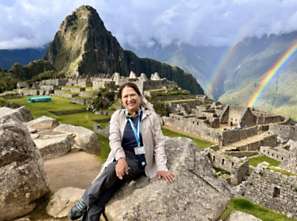
Kerry Chirinos has been a Trip Experience Leader for Machu Picchu & the Galápagos since 2009.
Kerry Chirinos: The Inti Raymi festival, or "Festival of the Sun" in Quechua, was one of the most important celebrations for the Incas. It was held in the capital of the Inca Empire, Cusco, during the winter solstice, considered the coldest day of the year. During this festival, the Incas expressed gratitude and prayed to the Sun God, affectionately known as Tayta Inti or "Father Sun," asking him not to drift away and to bless them with good harvests.
O.A.T.: The festival was banned in 1535. Can you tell us about the treatment of the Inca at the hands of the Spanish at this time?
K.C.: The Inti Raymi was celebrated until 1571 by the last Incas of Vilcabamba, with Felipe Túpac Amaru being the last to celebrate it before his execution ordered by Viceroy Francisco de Toledo. During the colonial period, cultural and religious clashes occurred. Indigenous people were evangelized, and their Andean festivals were replaced with Catholic ones. They were divided into nobles and commoners but always remained subordinate to the Spanish and Creole elites.
O.A.T.: When the festival was revived in 1944, how did it differ from the original celebration?
K.C.: Unlike the original celebration, the revived version eliminated animal sacrifices. It featured 600 actors, and the Inca’s entourage included soldiers in a theatrical version based on historical chronicles. The celebration took place at the esplanade of Sacsayhuamán, whereas it was originally held in the Huacaypata square (now Cusco’s main square). The President of the Republic, Manuel Prado Ugarteche, attended as a guest of honor.
O.A.T.: Is it still considered an authentic sacred ceremony by the Quechua people?
K.C.: For many Quechua people, the Inti Raymi remains a sacred ceremony, although it has also become a tourist spectacle. It blends tradition with modern elements, as some original details have been lost.
O.A.T.: What are some of the notable elements of the festival today?
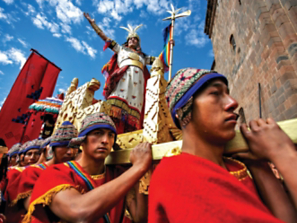
The carrying of the Inca, one of the festival’s main characters, is a highlight of the celebration.
K.C.: The Inti Raymi is a celebration of tradition and history. Key characters include the Inca, who wears a feathered crown, colorful tunic, and gold jewelry symbolizing the sun, and the Coya, adorned with silver jewelry symbolizing the moon. The event features Andean music with flutes and drums, traditional dances, rituals like the Sacred Fire and the Llama Sacrifice, and visits to iconic Cusco sites: the Temple of the Sun (Qorikancha), the Main Square, and Sacsayhuamán. Traditional dishes like chiriuchu (a layered dish of meats, corn, potatoes, and peppers) and chicha de jora (a fermented corn beverage) showcase Andean culinary richness.
O.A.T.: Have you ever attended Inti Raymi?
K.C.: In fact, I had the opportunity to attend the Inti Raymi from a very young age, as my house was located in what was once part of the Temple of the Sun, Qorikancha. From there, I could watch the rehearsals that began months before the festival. In the early hours of the celebration, I would see how the characters prepared themselves, which was always exciting. The nearby streets were closed, allowing me to enjoy the ceremony up close, watching the Inca carried by soldiers, the Coya adorned with silver jewelry, and the entire imperial court in their beautiful attire.
The dances and procession made their way to the Plaza de Armas, and I could follow them, even climbing the majestic hill of Sacsayhuamán, standing over 11,500 feet high. Walking there wasn’t difficult thanks to the excitement I felt as I imagined myself in that era, where the Inka was regarded as the sole son of the Sun. This experience made it even more special. It was a part of my life for twenty years.
Now, I have the wonderful opportunity to share this tradition with my children and my entire family, making it an even more meaningful and cherished experience.
O.A.T.: Do O.A.T. travelers get the chance to attend?
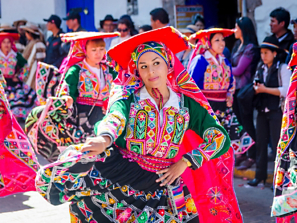
A woman dances in traditional costume.
I had the opportunity to attend the Inti Raymi with a group of O.A.T. travelers. We visited the Temple of the Sun, located just three blocks from our hotel. We arrived two hours early to secure a good spot, as the crowd was overwhelming. Due to the large number of attendees, we couldn’t reach the Main Square, and we were unable to walk to Sacsayhuamán due to its significant altitude. Despite these challenges, our travelers thoroughly enjoyed this unique experience.
It was a beautiful experience to share such special moments with the travelers, reminiscent of the wonderful times I enjoyed during my childhood.
O.A.T.: How is the Inti Raymi celebrated in other parts of Peru and South America?
The Inti Raymi is most grandly celebrated in Cusco, the former capital of the Tahuantinsuyo. In other regions of Peru, such as Ayacucho or Huánuco, it is celebrated with more localized versions, blending Andean elements with Christian traditions. In other countries like Bolivia, Ecuador, and Colombia, this festival is also observed, albeit more symbolically and simply, honoring the sun and harvest while maintaining the spirit of Inca tradition.
Celebrate the rich Inca heritage of the Quechua people at any time of year when you join O.A.T. for Machu Picchu & the Galápagos.


