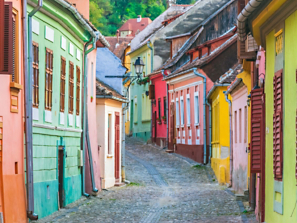
Deep in the heart of Romania's Transylvania region, the medieval citadel of Sighisoara flaunts candy-colored buildings and imposing towers that paint a picture of fairy-tale perfection. But behind this cheerful façade lies a darker tale—one of a ruthless 15th-century prince whose notorious reputation would eventually inspire one of literature's most enduring villains.
While Bram Stoker's Count Dracula may be a fictional character, his namesake, Vlad III Dracula—better known as "Vlad the Impaler"—was very real. And it was here, within Sighisoara's fortified walls, where the man who would become synonymous with both heroic leadership and brutal warfare first drew breath.
Staking his claim
Born in 1431 AD, Vlad III inherited more than just his father's name—he also inherited a realm in constant peril. As ruler of Wallachia, a principality bordered by the mighty Ottoman Empire, he faced the monumental task of maintaining his territory's independence against overwhelming odds.
His father, Vlad II, had earned the nickname "Dracul" (meaning dragon) after joining a knightly order called the Order of the Dragon (which symbolized Christian resistance against the Ottoman Empire). Young Vlad III became known as "Dracula," meaning "son of the dragon"—a name that would take on far more sinister connotations centuries later.
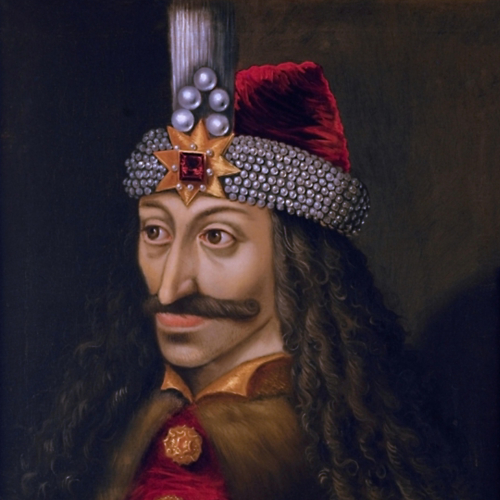
Vlad III, sitting pretty, adorned in a jeweled crown and crimson velvet robes.
While many medieval rulers were known for their harsh tactics, Vlad III elevated cruelty to an art form. His preferred method of execution—impalement—earned him his more infamous moniker: Vlad the Impaler. Historical accounts suggest he employed this gruesome punishment against both enemies and criminals, sometimes leaving thousands of victims displayed as a warning to others. Yet in Romania, many view these actions through a different lens. His brutality—while shocking by modern standards—helped maintain order in a chaotic time and successfully deterred Ottoman invasion attempts.
Rest in… pieces
Vlad III's life ended as dramatically as it was lived. In 1476, during a campaign to reclaim his throne, Dracula was killed in battle against Ottoman forces somewhere between the modern-day Romanian towns of Bucharest and Giurgiu. Accounts of his death vary, with some suggesting he was killed by his own troops, who mistook him for a Turk, others claiming he fell valiantly in a final stand against a much larger force, and still others arguing that he was assassinated by a Turkish spy. His decapitated head was reportedly sent to the Ottoman Sultan Mehmed II as proof of his demise, where it was displayed on a spike in Constantinople as a grim warning to his enemies.
So, where is Dracula buried? Unfortunately, it remains a mystery. For centuries, popular belief held that he was interred at the Snagov Monastery. However, excavations in 1933 uncovered no tomb or coffin beneath the unmarked tombstone said to belong to Vlad—instead, the excavation revealed "many bones and jaws of horses." Some historians suggest that Vlad was more likely buried at the church of the Comana Monastery, which he had established, and which lay near the battlefield where he met his end. Intriguingly, during archaeological work in the 1970s, a headless body—possibly that of Dracula himself—was discovered on the monastery grounds.
Despite the uncertainty of his final resting place, it’s widely believed that the story of his life began in the picturesque town of Sighisoara. Today, visitors can explore the very house where Vlad III was (purportedly) born, now operating as a restaurant and museum—a butter-yellow building marked by a wrought-iron dragon. The surrounding UNESCO World Heritage-protected town—with its 14th-century clock tower and cobblestone streets—provides a perfectly preserved medieval backdrop that helps visitors imagine the world that shaped young Vlad.
A novel approach to evil
Four centuries after Vlad's death, Irish author Bram Stoker would stumble upon his story while researching Transylvanian history. Though Stoker never visited Romania, he was captivated by accounts of the medieval prince and borrowed both his patronymic name "Dracula" and elements of his history for his 1897 novel. Stoker transformed the historical figure into something far more supernatural, creating the archetypal vampire that continues to haunt popular culture today.
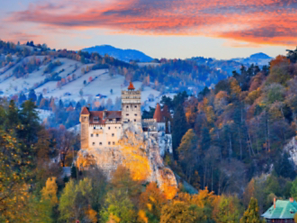
Perhaps no structure in Romania is more closely associated with Dracula lore than Bran Castle. Perched dramatically atop a rocky promontory in the Carpathian Mountains, this imposing 14th-century fortress has become known worldwide as "Dracula's Castle." While Vlad III's historical connection to the castle was likely limited to brief visits, its gothic architecture and strategic location made it the perfect inspiration for Bram Stoker's fictional Count Dracula's lair.
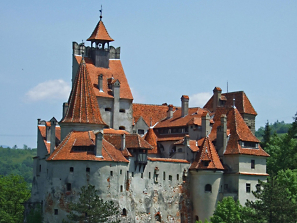
Bran Castle was built by Saxons in 1377 AD, who were given the privilege by Louis I of Hungary.
The castle's soaring towers, narrow winding staircases, and secret passages certainly fit the part—even if the real Vlad preferred his fortress in Poenari. Today, Bran Castle stands as Romania's most visited tourist attraction, where the lines between fact and fiction continue to blur in the misty mountain air.
"Count-ing" Vlad’s legacy
After Bram Stoker penned his Gothic masterpiece Dracula in 1897, he sparked a centuries-spanning parade of adaptations, from the haunting 1922 German film Nosferatu—with its iconic shadowy Count Orlok—to Werner Herzog's atmospheric 1979 reimagining starring Klaus Kinski. The vampire genre has even charmed younger audiences through characters like Sesame Street's beloved Count von Count, while 2024 brings acclaimed director Robert Eggers' fresh vision of Nosferatu to screens yet again—this time starring Bill Skarsgård and Lily-Rose Depp.
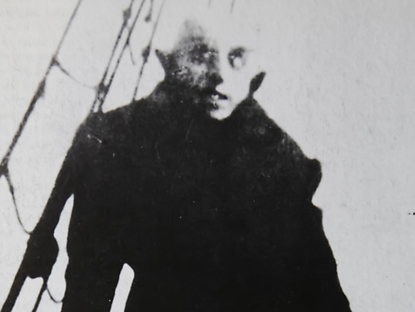
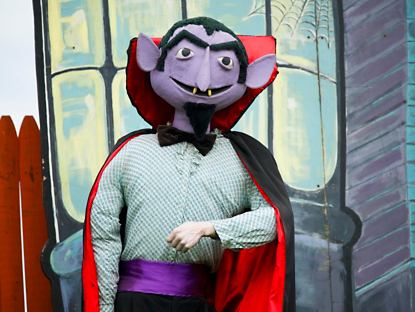
Dracula’s story continues to captivate audiences worldwide, inspiring numerous "Nosferatu" films and Sesame Street’s beloved Count von Count.
Yet the real Vlad III differs dramatically from these supernatural interpretations. While Stoker's count lurked in a remote castle surrounded by otherworldly horrors, the historical prince was a complex figure who fought to protect his homeland during one of Europe's most turbulent periods. His tactical brilliance and political acumen often get overshadowed by tales of his cruelty—though both aspects were crucial to his survival in medieval Europe's dangerous political landscape.
Modern Romania embraces this complex legacy, understanding that Vlad the Impaler's story draws visitors while also representing an important chapter in their national history. In Sighisoara, local guides share both the myths and historical facts, helping travelers understand the man behind the monster—a ruler who, despite his brutal methods, remains a symbol of Romanian independence and strength.
Step into the birthplace of history's most infamous dark prince and explore the enchanting medieval citadel of Sighisoara during our New! Eastern Balkan Experience: Bulgaria & Romania adventure.