
If travelers are on our The Aegean Islands, Athens & Istanbul adventure when the clock strikes midnight on December 31st, they might just witness Greek families hurling pomegranates at front doors.
In Greece, good fortune doesn't just arrive on New Year's Day—it explodes onto the scene, quite literally, in a burst of crimson seeds and ancient tradition. As the clock strikes midnight on December 31st, Greek families gather outside their homes, armed not with champagne flutes but with nature's jewelry box: a ripe pomegranate.
Seeds of Fortune
The ritual is simple yet dramatic. When midnight arrives, someone (traditionally the head of the household) hurls a pomegranate against the front door, creating a spectacular display as hundreds of ruby-red arils scatter across the threshold. The more seeds that spread, the more abundance the new year promises to bring. It's a moment of joyful destruction that transforms mess into meaning—each glistening seed representing a future blessing.
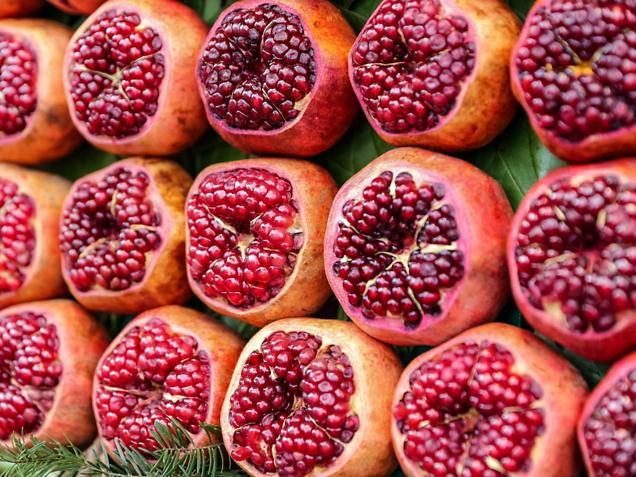
Pomegranates are filled by healthy seeds—packed with antioxidants, vitamins A, B, and C, and essential minerals.
For those who prefer their traditions with a touch more ceremony, there's an alternative timing. Many families wait until New Year's Day, donning their finest clothes and heading to church for the Divine Liturgy of Basil of Caesarea. The family patriarch brings a pomegranate to be blessed, and upon returning home, he requests entry as the year's first visitor—a position of symbolic importance in Greek culture. Only then does he perform the ritual smashing, accompanied by wishes for health, happiness, and prosperity.
Ancient Appetites
This wasn't always just a New Year's tradition. The pomegranate's significance runs deep in Greek culture, appearing in everything from Homer's "Odyssey" to the tragic tale of Persephone. When Hades offered Persephone pomegranate seeds in the underworld, it was more than a snack offering—he was crafting an unbreakable bond. The fruit's prominence extended to the mysterious Eleusinian ceremonies, where priests crowned themselves with pomegranate branches, and to ancient art, where the fruit appears in Minoan treasures from the 17th century BC.
Today's Greeks understand what their ancestors knew: this isn't just any fruit. Packed with antioxidants (more than red wine or green tea); vitamins A, B, and C; and essential minerals, the pomegranate is as nutritious as it is symbolic. Modern Greek cosmetic companies even harness its anti-aging properties in their beauty products, proving that this ancient symbol of eternity might actually help you look eternal.

Vasilopita is a sweet and flavorful Greek New Year's Cake—and you can add pomegranate to it for extra luck and good fortune!
Whether you're Greek or simply Greek-curious, why not welcome this year with a bang? Grab a pomegranate, make a wish, and let fortune explode across your threshold. Just remember to keep a broom handy—good luck can be magnificently messy.
Recipe: Vasilopita me Rodi (New Year's Cake with Pomegranate)
This traditional Greek New Year's cake features pomegranate seeds both in the batter and as decoration, combining two symbols of good fortune for the year ahead.
Ingredients:
For the cake:
For the topping:
Instructions:
Serving tradition: The head of the household cuts the Vasilopita at midnight on New Year's Eve or after lunch on New Year's Day. The first piece is for Christ, the second for the Virgin Mary, the third for the house, and then pieces are distributed to family members from oldest to youngest. Whoever finds the coin will have good luck for the year!
Immerse yourself in the culture, customs, and traditions of Greece during The Aegean Islands, Athens & Istanbul.
The Death of Socrates: There Was a Socratic Method to his Madness
Meet the barefoot, shabby-robed philosopher who never wrote a word yet became Western Philosophy's founding father—Socrates, whose fearless questioning of authority and dramatic death by hemlock in 399 BCE would transform him from Athens' gadfly into history's most influential thinker.
Recipe: Avgolemono Two Ways
Prepare either a soup or sauce with Greece’s classic pairing of egg and lemon.
Get The Inside Scoop On...
Like what you see here? Receive weekly updates right in your inbox.
inside-scoopArticles In This Edition

A Song for the Morning

By the Dozen

My Thanks to the Pig

Smashing Success: Exploding Pomegranates is One (Greek) Way to Bring in the New Year

Top 10: Adventures with Single Space Available in 2025