
Japan’s typical snowman figure has roots in Zen Buddhism. Discover the profound respect the Japanese have for ancient traditions during Japan’s Cultural Treasures.
People have been obsessed with crafting resemblances to the human form for centuries. From the story of God crafting Adam and Eve out of Earth, to ancient figures in cave paintings, the body has always captivated the human imagination. So, it’s no wonder that given a moldable material from the sky, snowmen were born. The first documented reference to a snowman dates back to the 1300s, and by the 1500s, snowmen were rising in popularity—it is even believed that Michelangelo crafted some! Today, snowmen are a beloved winter tradition, made all over the world. However, even though there are similarities between them, none of these snowy traditions looks just like another.
Yuki-Daruma—Japan
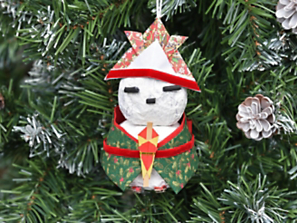
A traditional Japanese snowman adorns a Christmas tree.
Japan, like many countries, has its own unique style of snowmen. Called yuki-daruma, Japan’s snowmen tend to resemble a Buddhist monk named Bodhidharma, who is credited for bringing Zen Buddhism to China from India. Round traditional Japanese dolls, called daruma dolls, resemble Bodhidharma’s likeness. The term daruma comes from dharma in Sanskrit, the language found at the root of Buddhism. Combine this with Japanese yuki, meaning snow, and you’ve got yourself a snowman!
Most noticeably different from Western snowmen is the number of snowballs used to craft a yuki-daruma. A larger snowball is used for the body, and a smaller one is used for the head—quite different from America’s classic three snowball creation. This snowy figure has stayed consistent since the Edo Period, sometime between the 1600s and the 1800s. Another difference in these snowmen is their lack of limbs. American snowmen typically find themselves with branch arms, but this isn’t the case in Japan. These short snowmen tend to keep their rounded body free of limbs, as Bodhidharma’s arms and legs are believed to have atrophied during his extensive meditation.
Böögg—Switzerland
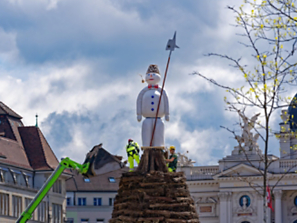
The famed Swiss Böögg before the clock strikes 6pm ...
The Böögg, a famed snowman from Switzerland… isn’t made of snow. You read that right! Since 1837, Switzerland has celebrated the Sechseläuten march in the beginning of spring, which includes a famous snowman figure composed of wood and stuffed with explosives. Sechseläuten is a centuries-old tradition held in Zurich that heralds the beginning of spring. In the 1500s, guild workers made up the entirety of Zurich’s city council. They decided that in the warmer months, labor should end at 6pm, an hour earlier than it did during the rest of the year. Ever since, Sechseläuten, which roughly translates to the ringing of the 6 o’clock bells, has been celebrated.

… and after.
This event includes guild members dressed in historical costumes, music, horse parading, floral arrangements, and of course, the Böögg. Not present at the original Sechseläuten, but a beloved tradition since the late 19th century, the Böögg is a snowman figure that sits upon a large pyre. The burning of the Böögg serves to drive out the winter months and usher in the spring and summer. At 6pm sharp, the pyre is lit, and the faster the Böögg’s explosive-filled head explodes, the better! The exploding of the snowman’s head is said to represent the upcoming weather, and the less time it takes, the more sunshine will come.
Jakob—Germany
Though he has a normal name, Jakob the snowman is anything but. Held in southern Germany, the Bischofsgrün Snowman Festival, also known as Schneemannfest, is a carnival that celebrates winter. In the center of the festivities sits Jakob, a giant snowman who seems to grow in height each year. The construction of this huge figure has been a tradition in the town of Bischofsgrün since 1985 and takes a whole team of volunteers. Though he’s constructed with three snowballs, just like American snowmen, Jakob’s size is a defining factor. This small town uses heavy construction machinery and a plethora of shovels to construct Jakob, who nowadays stands at over 30 feet tall.
This festival sees a range of fun events, all watched over by Jakob, who sits in front of the town church, overlooking the market square. Children enjoy games in the afternoon, and by night, the streets are filled with music. DJs and musicians play as townsfolk and visitors dance around Jakob’s towering frame. The festival is well known for its mulled wine, doughnut eating contests, and torchlight parade through the town square. The festivities are merry each year, as is Jakob, though his height does rely on how much snow the area gets. Who knows how tall he’ll be this February!
Experience the ancient and diverse traditions of Japan—at any time of year—during Japan’s Cultural Treasures.
Rent Control
Described as a heartwarming solution to loneliness, a popular new service in Japan named OK Obaachan lets you rent what?
Parting Shots: The Art of Japanese Death Poems
The Japanese tradition of "Death Poems"—or jisei—were a creative means of accepting death and often beautiful reminders to cherish life.
Festive Holiday Flavors Around the World
Along with spending time with family, holidays share a common link that brings people together: food.
Get The Inside Scoop On...
Like what you see here? Receive weekly updates right in your inbox.
inside-scoopArticles In This Edition

Confection Connection: How Ecuadorian Cacao Elevates Belgian Chocolate

Do You Want to Build a Snowman?

Something Special: Exclusive Itineraries by Sea & River for 2026

Survey Says: Improving How We Gather Traveler Feedback … and Why it Matters

Yule Fuel