
Would Kentucky Fried Chicken have a welcome seat at your holiday table? If you were to experience Japan’s Cultural Treasures over Christmastime, you might be surprised by certain traditions.
We all know the meaning of Thanksgiving. Gathering with loved ones, eating too much turkey, watching football … and before too much eggnog kicks in, acknowledging the blessings in our lives by giving thanks. With its origins in a much-mythologized 1621 harvest feast shared by the pilgrims and the Wampanoag, most consider this cherished annual tradition celebrated every fourth Thursday of November a uniquely American holiday—but that’s not quite true. Many cultures in other parts of the world have similar annual traditions this time of year, everything from harvest and winter solstice festivals up to New Year celebrations. Along with spending time with family, they all share a common link that brings people together: food.
More than just sustenance, food unites people in a shared experience of joy and togetherness across cultures and continents. There may not be turkey and all the fixings on the menu, but almost every country has its own unique culinary traditions that make the holidays special …
Traditional holiday foods in Japan—and one that’s extra crispy
In a custom called mochitsuki, Japanese families invite friends over to spend the day before New Year’s pounding out mochi rice cakes. Guests take turns pinching off small pieces of the sweet, glutinous mass that are made into small buns and later eaten for dessert. Mochi rice cakes are also an important ingredient in a popular New Year’s breakfast soup—and possible hangover cure—called “ozoni.” And at midnight on New Year’s Eve, Japanese people follow a tradition that dates to the 17th century and bid farewell to the past year by slurping down bowls of buckwheat soba noodles, or toshikoshi soba. Long soba noodles symbolize longevity and prosperity for the year ahead.
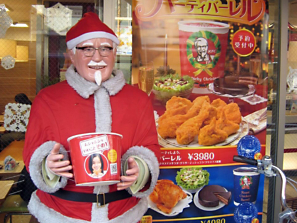
Just how big is KFC at Christmas in Japan? It accounts for a third of the chain’s sales in the country.
But perhaps the strangest holiday tradition—this one dating back to only 1974, the result of a wildly successful marketing campaign—is a take-out food item that Japanese households seem to crave for Christmas Eve or Christmas Day: Kentucky Fried Chicken! Bizarre as it sounds, it’s so popular that the price skyrockets during the holidays, and people must place their orders well in advance to ensure delivery of the food on everyone’s “bucket list.” At least for the holidays, Colonel Sanders is King in Japan.
Italians feast on fish, but New Years is for the beans
Most of us are familiar with the Feast of Seven Fishes. Popular in southern Italy, this traditional meal features seven different kinds of seafood served on Christmas Eve. But by the time New Year’s Eve rolls around, Italians are ready for a little meat on the menu. New Year’s Eve in Italy is celebrated alongside La Festa di San Silvestro (in memory of a pope who died on this day in 335 in Rome). A traditional celebratory family feast for New Year’s Eve almost always includes cotechino con lenticchie, a spicy sausage and lentil dish that is said to bring good luck in the upcoming year. If you’re familiar with lentils, these small legumes are flat and round, which reminds some people of coins—and that’s where the prosperity-boosting properties of the hearty soup come from. In some Italian homes, another type of pork sausage (zampone) is used instead of cotechino, but the promise of money and good fortune is all in the lentils.
Another important part of all New Year’s celebrations in Italy is grapes. Seen as symbols of a year of good health, Italians try to consume as many as possible at the stroke of midnight, when the New Year officially begins. The more grapes you eat, the better.
Korean soups to get you in the holiday spirit, and one to ward off evil spirits
The special day to spend with family and pay tribute to ancestors in Korea is winter solstice (the shortest day and longest night of the year ). And the culinary star of every winter solstice celebration is a rice cake soup called tteokguk. Like a lot of New Year’s foods (or Lunar New Year in this case), tteokguk is considered a good luck dish filled with symbolic significance.
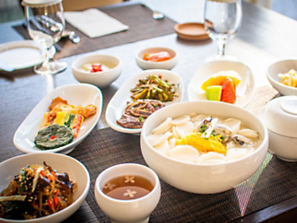
A traditional Korean Lunar New Year feast, including the rice cake soup known as tteokguk.
Typically cooked in a steaming broth with beef or other toppings, the white color of the chewy-soft rice cakes signifies purity and good fortune, so downing a bowl at this time of year is a way to start the new year off fresh. In fact, age is counted from the first day of the lunar new year in South Korea rather than individual birthdates. This “communal aging” means that no matter when your birthday is, you become a year older after consuming a bowl. To find out a person’s age in South Korea, all you have to do is ask them “How many bowls of tteokguk have you eaten?"
As a hedge against evil spirits, another popular food during Korean winter solstice celebrations is a red bean paste porridge called patjuk. This rich, stick-to-your ribs dish is made by cooking red beans until they form a thick paste, then adding small balls of glutinous rice into the mix. Since the color red is considered a powerful symbol of protection in Korea, families believe this traditional red bean porridge can chase away any bad spirits in the upcoming year. And because the rice balls symbolize new life, it’s also traditional to eat one rice ball for each year of your life. To make sure of this, when there’s a big pot of patjuk steaming away on the stove, Korean cooks will count how many rice balls are served to each loved one.
In Vietnam, the best time for family and food is Tet
Vietnam’s biggest food and family holiday is their Lunar New Year (or Tet Ngyuen Dan), a week-long celebration that kicks off on the first new moon after January 20. Similar to the entire holiday season in the West, the focus is on honoring ancestors, parents, grandparents, and even teachers. Believing that any and all actions taken during this period sets the tone for the upcoming year, it’s a harmonious time when personal grudges fade and arguments are forgotten. It’s also the time to clean and decorate your home, pay off any debts, pay respect to family and friends, and most importantly, to eat well. The Vietnamese even say “an Tet,” which literally denotes “eating Tet.” And since Tet Nguyen Dan translates as "feast of the first day," the serious eating begins on the first day of Tet.
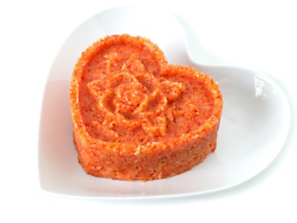
At its most basic, Vietnam’s xoi gac contains just two main ingredients: white sticky rice and baby jackfruit for color.
Traditional foods during Tet vary by region due to different weather conditions (and availability of ingredients) in thecountry, but they always include banh chung (also called banh Tet, for obvious reasons). These square-shaped packages ofsticky rice, mung bean puree, and seasoned pork wrapped in banana leaves are often tied with a little red ribbon forgood luck. Another favorite of every Tet feast is xoi gac, or red sticky rice. Made from the red gac fruit (also knownas baby jackfruit), the bright red color symbolizes happiness, good fortune, and prosperity.Unfortunately, shark fin soup—which is in decline in China and other countries—is still considered a prestigioustraditional holiday dish in Vietnam. When traveling to visit family and friends during Tet, the Vietnamese people alwaysbring gifts of food like banana cakes made with coconut milk—which somehow feels like the equivalent of bringing afruitcake in the United States. But there are myriad Tet dishes and almost all of them have deep cultural significance.Their preparation is often a family affair, creating a greater sense of unity and togetherness during this special timeof year.Greeks are known to pig out a bit on the holidaysIn a custom that began with the Ancient Greeks, when farmers used to sacrifice a pig to ensure a good harvest, pork isthe traditional Christmas dish that brings families together in many parts of Greece. And they go whole hog with thetradition, too. Many families will breed a pig for the express purpose of, let’s just call it “putting it down” beforeChristmas. The practice is known as hoirosfagia (pig slaughtering), or somewhat inexplicably, gouronochara (which means“pig happiness”). Feasting ensues, with the tastiest parts of the pig set aside for the Christmas table. But nothinggoes to waste, with the skin used for shoes, the hair used to make brushes, and the bones for a tasty broth.
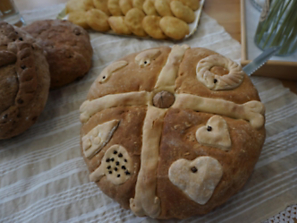
The decorations atop a traditional Christopsomo cake are highly symbolic.
Another popular tradition gracing Christmas Day tables across Greece is Christopsomo, or Christ’s Bread. This round-shaped loaf is covered in sesame seeds and decorated with a large Greek cross in the center. There are often shelled walnuts on the top as well, which symbolize fertility.
A few more beloved—and not so beloved—traditional holiday foods
For a taste of a holiday tradition that is both close to home and completely foreign, consider joining Japan’s Cultural Treasures over Christmastime.
Motherless Day
Why did Japan once ban Mother's Day, the words for "pocket" and "brassiere", and jazz?
Rent Control
Described as a heartwarming solution to loneliness, a popular new service in Japan named OK Obaachan lets you rent what?
Say it with Chocolate
On Valentine’s Day, in which country do women give gifts of chocolate to the men in their lives—from sweethearts to family to "obligatory" coworkers?
Get The Inside Scoop On...
Like what you see here? Receive weekly updates right in your inbox.
inside-scoopArticles In This Edition

"Reconstructing" a Family’s Past in Sicily

Eating My Way Around the World

Festive Holiday Flavors Around the World

Food Flight

Let’s Talk Turkey

Something Special: 6 Limited-Departure Itineraries by Sea and River for 2026