
Death poem on a stone stele dedicated to Kawatake Mokuami, located in Tokyo—a historic city travelers will visit on O.A.T.’s Japan’s Cultural Treasures adventure.
Shortly before his death at the age of 90, the 19th-century Japanese poet Kiba wrote the following:
My old body: a drop of dew grown heavy at the leaf tip
Knowing that he wasn’t long for this world, Kiba was simply following the ancient Japanese tradition of jisei, or "death poems." In addition to serving as a spiritual reflection, jisei poems are meant to be an expression of the acceptance of death and a reminder to cherish life during the short time we’re here—a universal message that is perfectly encapsulated in Kiba’s simple poem. jisei in Japan is also rooted in Buddhism—one of the country’s two major religions—which encourages the constant contemplation of death and stresses the ephemeral nature of life.
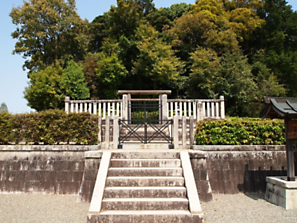
The mausoleum of Emperor Temmu and Empress Jito, whose son—Prince Ōtsu—is accredited with the first instance of jisei.
The first instance of jisei in Japanese culture is attributed to a seventh-century poem composed by Prince Ōtsu, the son of Emperor Tenmu. After being falsely accused of treason and forced to commit suicide, the young prince wrote the following poem moments before his death …
Today, taking my last sight of the mallards / Crying on the pond of Iware / Must I too vanish into the clouds?
As final words like Prince Ōtsu’s became common practice—primarily with Japanese aristocracy—jisei were soon codified and some rules were expected to be followed. The first was that death was not to be mentioned directly, which also served as a way for poets to reflect on how they spent their lives—which is why we see so many terms like falling dew, falling flowers, withered fields, and other metaphors for death in jisei. Of course, authors knew that once they were gone, there really weren’t any consequences for breaking the rules, which is why we get occasional exceptions like one composed by the 18th-century poet Kisei:
The duty for my country / Unfulfilled / Arrows and bullets spent / We fall /—how sad it is
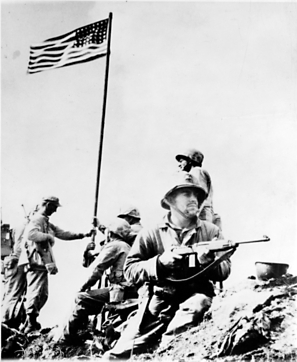
Jisei wasn’t only an ancient practice—General Tadamichi Kuribayashi wrote a death poem during the battle of Iwo Jima in World War II.
During the Samurai era (roughly from the 12th century to the late 19th century), jisei focused on honor and loyalty, serving as both personal testaments and expressions of devotion to a lord or clan. For a Japanese warrior, death was something to be accepted, not feared. Nogi Maresuke was a Japanese military officer who spent his life in the service of Emperor Meiji, who died in 1912. Nogi’s death poem reveals the significance of loyalty and piety to one’s master over fear of death:
The Master of the World / Has passed away / And after him / Eager to serve my lord / Go I
Believing it as his duty to continue serving his master by following him into the afterlife, Nogi, along with his wife, committed suicide on the day of the emperor’s funeral.
Jisei of Buddhist monks, on the other hand, almost always focused on the impermanence of life and the cyclical nature of existence. Many are particularly poignant, like this one from the Zen Buddhist monk Sunao, who died in 1926 at the age of thirty-nine:
Spitting blood clears up reality / and dream alike
Perhaps the best example of a jisei that exemplifies Buddhist ideas of the ephemeral nature of life is one by the 14th-century Zen master Ichikyo Kozan, who died sitting upright after putting down his brush which he used to write:
Empty-handed I entered the world / Barefoot I leave it / My coming, my going— / Two simple happenings / That got entangled
Modern-day jisei—especially during World War II, when soldiers composed poems before embarking on kamikaze missions—often combined personal reflections with patriotic messages.
These are the guys you want to meet in the afterlife
Not all poets took their death poems seriously, though. One used the occasion to poke fun at Basho's famous death poem ("On a journey, ill: / my dream goes wandering / over withered fields"). This poet’s dreams took him in an entirely different direction, when he wrote:
Locked in my room / my dream goes wandering / over brothels.
Morikawa Kyoriku, a pupil of the poet Basho, used his death poem to comment on the democratic process of death:
Till now I thought / that death befell / the untalented alone. / If those with talent, too, / must die / surely they make/ a better manure?
Another poet, Moriya Sen'an, had other plans for the afterlife. Writing in 1838, his death poem read:
Bury me when I die beneath a wine barrel in a tavern. With luck, the cask will leak.
What’s especially impressive is that the Japanese for "the cask will leak" (moriyasennan) is phonetically identical to the writer’s name.
Western culture favors spontaneity over poetry
Like many cultural differences between the East and West, premeditated death poems seem rather … odd? If anything, Western culture puts more stock in spontaneous last words, perhaps stemming in the belief that the truest self emerges the closer one is to death. In fact, for centuries, Western families would gather around a deathbed in the expectation that a patriarch or some other loved one near the end would impart their accrued wisdom or dispense some pithy advice as a kind of ultimate farewell.
In Last Words: Variations on a Theme in Cultural History, author Karl Guthke writes that in Victorian times and earlier, people were greatly disappointed if there were no last words before someone passed away—or worse, if they felt the last words were not good enough. Guthke says that as early as the sixteenth century, Puritan "conduct books" stated that it was the duty of someone preparing to leave this world to hand off some original wisdom. He gives the example of British priest William Marsh, who died in 1864, to illustrate how seriously people took this:
"In their eagerness to catch [his] last testament his family installed his eldest daughter in the sick room, unseen by him, to record his conversation, whereupon he recovered and the entire process had to be repeated over a year later."
Not to judge, but it seems that the Japanese are onto something. Let’s be honest, people are capable of blurting out anything in their last moments. Composing a death poem, on the other hand, takes time and careful consideration, even soliciting input and criticism from others. While last words can be a shot in the dark, last poems are usually far more involved and thoughtful.
In a sense, the structure provided by this ritual ensured that people had time to reflect without the last-minute pressure of composing a parting message. Of course, this didn’t alleviate any pressure for those who feared a sudden death. In his book Japanese Death Poems, author Yoel Hoffmann recounts the story of a man named Narushima Chuhachiro, who began drafting his death poems in his fifties in case he died unprepared, sending this one to his poetry teacher: "For eighty years and more, by the grace of my sovereign / and my parents, I have lived / with a tranquil heart / between the flowers and the moon." His teacher sent Chuhachiro the following response: "When you reach age ninety, correct the first line."
Experience the culture of Japan and learn about the nation’s history during O.A.T.’s Japan’s Cultural Treasures adventure.
Soak it In: The Art of Forest Bathing—Japan's Natural Stress Relief
Whether seeking stress relief, immune system support, or simply a moment of peace in nature's embrace, forest bathing offers a scientifically validated path to wellness that bridges ancient wisdom with modern needs.
Sisters Out of Arms
Pearl Harbor National Memorial in Hawaii recently became an official "sister park" with what other war memorial?
Where in the World?
Where in the world was a shrine made to "float" on the sea to keep visitors from treading on the back of a god?
Get The Inside Scoop On...
Like what you see here? Receive weekly updates right in your inbox.
inside-scoopArticles In This Edition

10 Trips to Follow in the Footsteps of Famous Poets

A Heartfelt Tribute from the Road: When Travelers Become Poets

For Nancy, Our Guiding Star

NEW O.A.T. Adventure: Mekong River Cruise: Vietnam, Cambodia & Angkor Wat

Parting Shots: The Art of Japanese Death Poems

Where in the World?