
Read on to discover how “tea pets” bring comfort and personality to Chinese tea culture—and perhaps seek out one that represents you during New! China’s Imperial Cities, Natural Splendor & Modern Marvels.
Tea Rituals and Comfort
In the colder months, it is easy to find comfort in the warmer things, especially in a fresh cup of steaming tea. Though the world is full of vibrant and diverse cultures, many different people still find that same sense of familiarity and reprieve with a warm drink in hand. From Chinese tea rituals to Indian hospitable chai, tea is a universal sign of companionship, connection, and comfort in any season.
Tea Pets—not Pots!
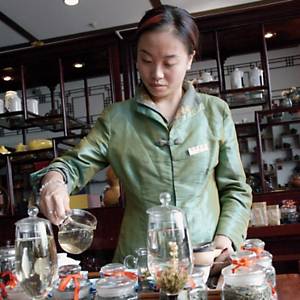
A tea master prepares herbal brews in old Shanghai.
With origins dating back centuries, Chinese tea pets represent connection and create a meaningful tea experience. In the 13th century, during the Yuan dynasty, the town of Yixing was known for its unique clay, zisha. It is believed that this is where the cultural practice of tea pets was created. Tea pets are small figurines, typically made of clay or unglazed ceramic, which are used alongside the practice of gongfu tea brewing, a traditional Chinese method of preparing tea. The small figurines are considered a part of the owner’s tea set, and, to some, are a crucial part of the brewing process. Tea pets are very personal items. Selected meticulously to represent your personality, each one is a unique extension of a person, and over time, can be seen as companions. From miniature lion dragons to little elephants, tea pets can be many different creatures.
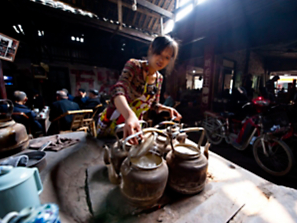
A traditional old tea house in Chengdu.
During tea sessions, a small amount of tea is poured over the pet, nurturing it in both spirit and body, and as its form and aroma changes with each pour, the tea pet is “raised,” like a real pet. Alongside the familiar comfort and connection a tea pet offers, it is believed that they can bring good luck to its bearer, if the animal is symbolic of such in Chinese culture. Tea pets can also be inherited from family members and are often displayed in memory of them. People use tea pets as decorations as well, and they can be found on home shelves. Even just seeing a tea pet while brewing can bring immense comfort and can bring a new sense of connection to an enjoyed tea ritual.
Indian Chai—Steeped in Community
Though the country of India is diverse in its cultures and language, there is a universal understanding in the power of chai to bring people together. Along the streets of India, vendors can be found serving chai out of small glasses or clay cups called kulhads, and those walking along the streets, whether they be locals, travelers, students, or workers, all gather to partake in a moment of comfort. In homes and workplaces, this tea invites conversations and welcomes slower moments with those nearby. When visiting a home in India, an offering of chai is customary and bound to be the second thing you hear, right after “hello!” Guests of any kind are welcomed by these offers and the familiar aroma of warm spices.
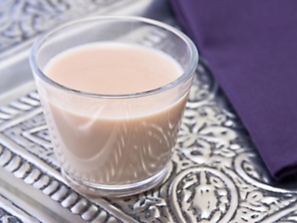
Sweet, aromatic chai is comforting for both the senses and the soul.
Connection is fostered through gatherings over chai, whether it be around vendor’s stalls or in cafés. Mostly informal, discussions over chai have shaped how people within Indian culture communicate and learn from one another; adda sessions, informal café discussions over chai that are commonly found in larger cities like Kolkata, have even shaped intellectual and political debates. Especially around stalls, a sense of community is found within the social hubs created by conversation over tea. It doesn’t matter where you come from when you have chai in hand—you’re a part of the community!
Other tea rituals that foster comfort and community around the world:
Learn about Chinese tea culture at a tea garden in Guilin during New! China’s Imperial Cities, Natural Splendor & Modern Marvels.

Related Video:
Best of China—2026 Itinerary
Get a preview of the discoveries that await you on this China adventure, from playful pandas to surprising natural landscapes and icons like the Terra Cotta Army and the Great Wall.
Stone Dragons and Concrete Giants: China's Two "Great Walls"
China's ancient Great Wall kept invaders out for centuries, but can its modern counterpart—the Three Gorges Dam—keep the Yangtze River in check?
The "4 Great Inventions" from Ancient China That Shaped the Western World (and Several More That May Surprise You!)
From gunpower to paper to the compass to the printing press and more, here are four inventions from Ancient China that shaped the Western World.
Lucky Charms: Symbolism in Chinese Culture
Discover the myriad signs of luck and prosperity with ancient roots in China.
Get The Inside Scoop On...
Like what you see here? Receive weekly updates right in your inbox.
Articles In This Edition


