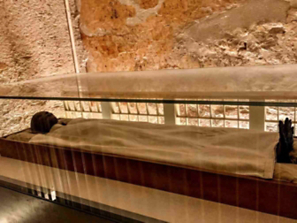
In a moment that echoes the excitement of Howard Carter's legendary 1922 discovery of King Tutankhamun’s tomb, archaeologists in Egypt have unveiled something extraordinary—the original burial chamber of King Thutmose II.
This significant discovery resolves one of Egyptology's longest mysteries: the elusive location of early 18th dynasty royal tombs. More importantly, it signals the potential for even more groundbreaking discoveries lurking beneath Luxor’s sands.
Digging out of archaeological drought
Hidden in the western wadis near Luxor's Valley of the Kings, this royal Egyptian tomb represents the archaeological community's most significant discovery in over a century—excavated by the joint Egyptian-British expedition under archaeologist Piers Litherland's direction. After a decade of persistent exploration, Litherland and his team ("discoveries like this are not made by individuals," he emphasized) have at last located the ancient pharaoh's long-concealed sepulcher.
Although archaeologists have discovered tombs of rulers from later periods in recent decades, no royal tombs from the prestigious early 18th dynasty have been found since Howard Carter's famous discovery of "King Tut" in 1922.
Indeed, for a century, the search for early 18th dynasty royal tombs had yielded nothing but disappointment—until now.
Gold rush
The 18th dynasty of Egypt (spanning from approximately 1550 to 1292 BC) represents one of the most glorious chapters in ancient Egyptian history. Classified as the civilization’s most prosperous time, it was the era in which ancient Egypt achieved the pinnacle of its power.
Beginning with the expulsion of the Hyksos invaders from Egypt by Ahmose I, the 18th dynasty ushered in the New Kingdom era—a time of unprecedented imperial expansion, monumental building projects, and cultural flourishing. Under rulers like Hatshepsut (Thutmose II's wife), Thutmose III (Thutmose II's stepson), Amenhotep III, and Akhenaten, Egypt extended its influence from Nubia to the Euphrates, amassed extraordinary wealth, and produced some of the most impressive art and architecture in human history.
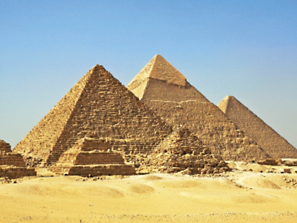
The pyramids of Giza were (rather mysteriously) built during Egypt's "Golden Age"—or the Fourth Dynasty—which predated the 18th dynasty by nearly 1,000 years and is widely regarded as the world's first great civilization.
Undoubtedly, ancient Egypt reached its zenith during this time. The era witnessed the construction of iconic temples and monuments that still command awe today—Karnak, Luxor, and the Valley of the Kings among them. This remarkable period culminated with the reign of the enigmatic boy-king Tutankhamun, whose untouched tomb yielded treasures that have mesmerized the world since their spectacular discovery.
Tomb raiders
Prior to King Tut's discovery in 1922, the tombs of his successors—19th dynasty pharaohs like Seti I (found in 1817) and Ramses II (1881)—had already revealed magnificent burial chambers adorned with elaborate wall paintings and hieroglyphics.
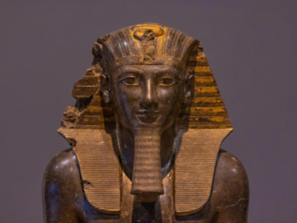
While there are plenty of ancient Egyptian statues of the pharaoh Thutmose III, the same can’t be said for his stepfather.
Meanwhile, Thutmose II remained in the shadow of his more famous family members—buried beneath all the archaeological fervor (pun intended!). Even today, most 18th dynasty pharaohs are represented in museums through artifacts recovered from their burial sites or monuments—such as those now displayed in the newly-opened Grand Egyptian Museum (GEM).
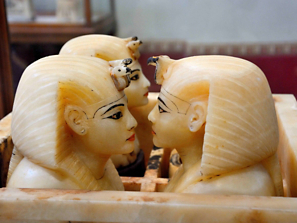
While Tutankhamun's treasures dazzle millions of visitors and his stepson Thutmose III's military conquests are well-documented, Thutmose II has been relatively obscure.
However, virtually nothing from Thutmose II's original tomb has ever been identified. While Thutmose II's mummy was discovered in the 19th century at the Deir el-Bahari cache (where priests moved many royal mummies during the 21st dynasty to protect them from tomb robbers), his original grave goods and burial treasures have never been found—making the potential discovery of this second tomb particularly exciting for archaeologists.
Written in the stars
For generations, archaeologists believed the burial chambers of 18th dynasty pharaohs were located closer to the Valley of the Kings. However, Litherland's team found Thutmose II's tomb nearly two miles away in an area previously associated with royal women's tombs.
The initial excavation began in 2022 when the team discovered a staircase leading underground. As they laboriously cleared flood debris from the descending corridor, they assumed they had found the tomb of a royal wife. The moment of truth came when Litherland entered the burial chamber and beheld a ceiling painted blue with yellow stars—a distinctive decoration reserved exclusively for kings' tombs.
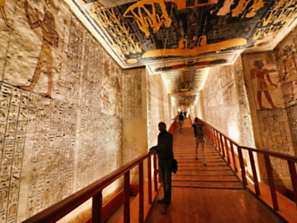
A visitor in the Tomb of Ramesses V and VI admires scenes from the Amduat funerary texts—which were also found in the tomb of King Thutmose II.
Further evidence emerged when they discovered remnants of the Amduat, a religious text reserved for pharaohs, confirming they had uncovered something truly extraordinary. Overcome with emotion, Litherland reportedly emerged from the chamber in tears, recognizing the historical significance of what they had found.
"It is an extraordinary moment for Egyptology and the broader understanding of our shared human story," declared Egypt's Minister of Tourism and Antiquities, Sherif Fathy.
Going with the flow
Perhaps the most intriguing aspect of this discovery is what wasn't found inside the tomb—the pharaoh himself (whose mummy had already been discovered in the 19th century) or any of his burial treasures, which remain missing from the archaeological record.
The ancient Egyptians had intentionally emptied the tomb themselves long ago. Through careful analysis, the team determined that the tomb had been built beneath a waterfall and flooded around 1473 BC, approximately six years after Thutmose II's burial in 1479 BC.
Only by meticulously sifting through tons of broken limestone did the archaeologists recover crucial evidence of the tomb's original occupant—small fragments of alabaster jars bearing inscriptions with the names of Thutmose II and his famous wife Hatshepsut—one of Egypt's greatest pharaohs and one of the few women to rule Egypt in her own right. These fragments, presumably broken during the relocation of the tomb's contents, provided the definitive link to Thutmose II.
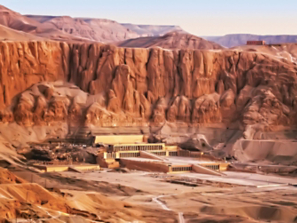
An aerial view of the Temple of Queen Hatshepsut near the Valley of Kings in Luxor, Egypt.
The evidence suggests that Hatshepsut herself may have overseen the emergency evacuation of her husband's burial treasures to a second, as-yet-undiscovered tomb after the flooding of the original site. This second tomb, Litherland believes, may still be intact with many of the pharaoh's funerary treasures untouched—potentially hiding beneath 23 meters of man-made layers designed to conceal and protect it from both floods and tomb robbers.
Rock solid plan
The elaborate measures taken to protect Thutmose II's second resting place showcase the remarkable engineering and problem-solving skills of ancient Egyptian architects. According to Litherland, the second tomb was likely designed by Ineni—the same 18th dynasty architect who built the first tomb and faced the embarrassment of its flooding.
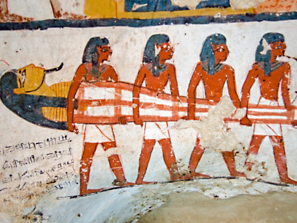
King Thutmose II’s tomb not only provides new insights into royal burial practices but also into the dramatic measures taken when those practices encountered unexpected challenges.
According to Litherland's theory, the architect Ineni may have employed unprecedented techniques to safeguard this second tomb from both flooding and thieves. Excavations near the first tomb location have revealed what appears to be an elaborate concealment system: thick layers of limestone plaster, massive limestone flakes, and rubble, topped with mud plaster and ash. Litherland believes large portions of cliff were even deliberately collapsed on top and cemented in place to further disguise the entrance. If his theory is correct, this ancient camouflage worked remarkably well—the fact that no burial goods belonging to Thutmose II exist in any museum or private collection worldwide suggests the second tomb may indeed remain undisturbed, waiting to be discovered.
So the archaeologists continue their painstaking work, carefully removing the protective layers in hopes of uncovering the second tomb which may contain the pharaoh's untouched treasures. For Litherland, who became fascinated with ancient Egypt as a young boy, the possibility of finding Thutmose II's final resting place is the culmination of a lifelong dream. "You dream about such things," he said. "But like winning the lottery, you never believe it will happen to you."
Witness the wonders of ancient Egypt and explore the Valley of the Kings during our Egypt & the Eternal Nile by Private, Classic River-Yacht adventure.