
Louis XIV and Philip IV meet on Pheasant Island in 1660 to seal the Treaty of the Pyrenees—a historic moment near the Camino route featured on our Northern Spain & Portugal: Pilgrimage into the Past adventure.
Nestled in the Bidasoa River between Spain and France lies one of Europe's most peculiar territories, a tiny island that switches nationalities twice a year like clockwork. For six months, Pheasant Island belongs to Spain. For the other six, it's French.
In fact, this 1.69-acre sliver of land has been peacefully changing hands for over 350 years, making it the world's smallest condominium. It may very well be history’s most harmonious ongoing border dispute—switching flags every February and August without a single shot ever fired.
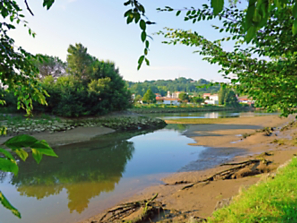
This tiny, uninhabited river island between France and Spain peacefully switches nationality every six months, making it the world's only territory with alternating sovereignty.
While travelers on Northern Spain's legendary Camino de Santiago pilgrimage route pass just miles from this diplomatic oddity, few know it exists. Yet this unassuming island holds centuries of royal intrigue, peace treaties, and a governing arrangement so unusual that only seven other places on Earth share anything similar.
To understand why a tiny river island became so significant, one must first grasp the devastation of the Thirty Years' War (1618-1648)—one of the most destructive conflicts in European history. What began as a religious dispute between Catholic and Protestant states within the Holy Roman Empire spiraled into a continental catastrophe involving most of Europe's major powers. The House of Habsburg—which controlled Spain, Austria, and much of the Holy Roman Empire—found itself battling France, Sweden, Denmark, and various German principalities in a complex web of alliances and betrayals.
The war transformed warfare itself, introducing new military tactics and weaponry that made battles deadlier than ever before. Entire regions were depopulated—some German states lost up to 60% of their population to combat, disease, and famine. Armies lived off the land, devastating countryside and cities alike. The phrase "the war feeds itself" became an unfortunate reality as mercenary armies pillaged their way across Europe, switching sides based on who could pay.
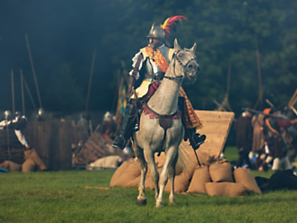
There are still demonstrations and reenactments from the Thirty Years’ War to this day.
When the Peace of Westphalia finally ended most hostilities in 1648, it fundamentally reshaped Europe's political landscape, establishing the principle of state sovereignty that still governs international relations today. However, France and Spain continued their bitter conflict. These two great Catholic powers should have been allies, but their war had become less about religion and more about dominance. Spain fought to maintain its Habsburg empire while France—under the young Louis XIV (now popularly known as the “Sun King”)—sought to replace Spanish hegemony with French supremacy.
It was against this backdrop of exhaustion and devastation that diplomats began meeting on Pheasant Island in 1648. The island offered perfect neutrality—close enough to both shores for easy access yet technically belonging to neither nation. Over the course of 24 separate conferences spanning 11 years, representatives slowly hammered out what would become the Treaty of the Pyrenees in 1659.
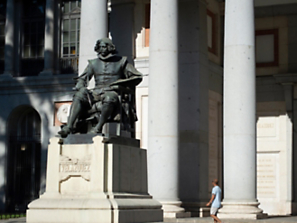
A statue of Diego Velázquez, who oversaw Pheasant Island’s meeting decorations in one of his final commissions.
The negotiations were extraordinary in their pageantry. Diego Velázquez—court painter to Spain's Philip IV and creator of the masterpiece Las Meninas (meaning "The Maids of Honor," a famous 1656 painting)—was brought in to oversee decorations for the meetings, one of his final commissions before his death. Wooden bridges connected both shores to the island, royal barges ferried dignitaries across the water, and magnificent tapestries transformed the modest landmass into a temporary palace. Each meeting required elaborate protocol to ensure neither side gained symbolic advantage—even the conference furniture was precisely measured to ensure equal height and grandeur.
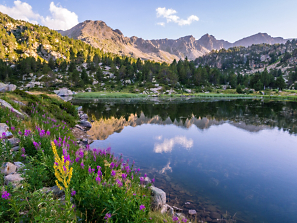
Following the Treaty of the Pyrenees, the stunning Pyrenees Mountains were established as the de facto permanent boundary between France and Spain
The Treaty of the Pyrenees did far more than end a war. It established the Pyrenees Mountains as the permanent border between France and Spain (a boundary that remains today), ceded significant Spanish territories to France, and most importantly, arranged a marriage that would reshape European dynasties. Spain agreed to pay France an enormous sum of 500,000 gold crowns (almost $2 billion in today’s dollars) and ceded territories including Roussillon and Artois—losses that marked the beginning of Spain's decline as Europe's dominant power.
The treaty's masterstroke was the marriage between Louis XIV and Maria Theresa of Spain, Philip IV's daughter. However, this wasn't the island's first royal matrimonial negotiation—in 1615, it had hosted the double marriage arrangements of Louis XIII to Anne of Austria and Philip IV to Elisabeth of Bourbon, cementing an earlier peace. But the 1660 ceremony was the most elaborate.
The wedding symbolism was carefully orchestrated. Maria Theresa crossed from the Spanish side of the island to the French side, literally stepping from one kingdom into another. Along with the massive dowry of 500,000 gold crowns, the marriage came with Maria Theresa's renunciation of her claims to the Spanish throne—though this renunciation would later be declared void when Spain failed to pay the dowry, giving Louis XIV a pretext to claim Spanish territories and eventually place his grandson on the Spanish throne.
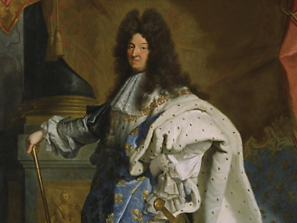
King Louis XIV, the "Sun King" of France (1643–1715), ruled for 72 years, centralizing power and making France a dominant European power while embodying absolute monarchy.
The island witnessed one final moment of historical irony in 1679 when another treaty was nearly negotiated there to end the Franco-Dutch War. Though these talks ultimately failed, they demonstrated the island's continued symbolic importance as neutral ground for European diplomacy.
So significant was Pheasant Island as a symbol of Franco-Spanish peace that both nations decided to share custody permanently. The arrangement, formalized in the 1856 Treaty of Bayonne, established that Spain would govern from February 1 through July 31, while France would take charge from August 1 through January 31.
This makes Pheasant Island the world's only condominium with alternating control. To be transparent, other shared territories do exist—Lake Constance is jointly administered by Austria, Germany, and Switzerland; the Gulf of Fonseca is shared by Honduras, El Salvador, and Nicaragua; and Antarctica is governed by 29 nations—but none switch sovereignty on a schedule. The Mosel River and its tributaries form a riverine condominium between Germany and Luxembourg, while the Brčko District is shared by different entities within Bosnia and Herzegovina. But only Pheasant Island has this unique temporal arrangement. To date, the island has changed hands peacefully more than 700 times.
The biannual handover ceremonies still take place with diplomatic formality. Representatives from the naval commands of San Sebastián and Bayonne meet on designated days, flags are exchanged, and administrative duties transfer from one nation to the other. In practice, the municipalities of Irun (Spain) and Hendaye (France) handle day-to-day management, which mainly involves maintaining the grounds and ensuring no one attempts to camp on the forbidden territory.
Despite its avian name, no pheasants inhabit Pheasant Island—a fact that disappointed French novelist Victor Hugo when he visited in 1843. "At most a cow and three ducks," he lamented. The name itself stems from a linguistic mix-up: Romans called it "Pausoa," the Basque word for passage or step, referring to its role as a crossing point. The French interpreted this as "Paysans" (peasants), which eventually morphed into "Faisans" (pheasants). The Spanish "Isla de los Faisanes" and French "Île des Faisans" both perpetuate this centuries-old mistranslation.
The island has collected other names throughout history—Conference Island, for the many diplomatic meetings held there, and Island of the Princesses, honoring the royal brides who crossed its narrow expanse to seal international alliances.
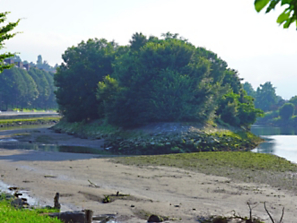
Another view of Pheasant Island.
Today, the island remains largely as Hugo found it… uninhabited save for poplars, weeds, and waterfowl. A stone monolith stands at its center, the only human-made structure, bearing inscriptions in Spanish on one side and French on the other to commemorate the Treaty of the Pyrenees. The island measures just 224 meters long by 41 meters wide, making it easy to miss from either riverbank.
Access remains strictly forbidden except during rare heritage open days and the biannual handover ceremonies. Even then, visitors can only marvel at how this tiny patch of land helped end decades of warfare and continues to demonstrate that some borders need not be battlegrounds.
Unfortunately, the Bidasoa River itself has become a more troubled boundary in recent years, with migrants attempting dangerous crossings from Spain into France. Yet Pheasant Island endures as a reminder of what international cooperation can achieve—a pocket of peace that has outlasted empires, survived world wars, and continues its six-month dance between nations without missing a beat—where a border dispute was solved not with walls but with a calendar.
On our Northern Spain & Portugal: Pilgrimage into the Past adventure, explore San Sebastián near Pheasant Island and follow the historic Camino de Santiago through Bilbao, Pamplona, León, and Santiago de Compostela.
Where in the World?
Where in the world can you find this "ghost village," intentionally left uninhabited as a reminder of a bloody massacre that took place during WWII?
High Noon
Which iconic Alpine peak lets you "Step into the Void" and earned its name from the sun's daily journey across its summit?
Where in the World?
Where in the world can you find this "ghost village," intentionally left uninhabited as a reminder of a bloody massacre that took place during WWII?
By the Dozen
In Spain, eating twelve of what food—in rapid succession—will ensure luck in the New Year?
Get The Inside Scoop On...
Like what you see here? Receive weekly updates right in your inbox.
Articles In This Edition

A Personal Connection to the Isle of Man

An Evolving Palate: Charles Darwin & His Unusual Diet

Astral Plains

Indonesia: Writings from the Road

Island Hopping: 10 Videos from Trip Experience Leaders & Program Directors

NEW! 2 Small Ship Adventures to the Aegean Islands

The Island That Can't Make Up Its Mind

Where in the World?