
If you happen to join our French Impressions: From the Loire Valley to Lyon & Paris adventure over April 1 and fall victim to the dreaded paper fish trick, just be thankful it’s not a real one.
If you happen to join our French Impressions: From the Loire Valley to Lyon & Paris adventure over April 1 and fall victim to the dreaded paper fish trick, just be thankful it’s not a real one.
Many are convinced that the origins of April Fools' Day go back to ancient Rome’s festival of Hilaria (Latin for joyful). Celebrated by followers of the cult of Cybele, festivities included dressing up in disguises (probably not Groucho glasses, though) and pulling pranks on their unsuspecting fellow Roman citizens. But there was never any hard evidence to link ancient Rome with April Fools’ Day—at least until another link came along.
This one dates to Emperor Constantine and a story about a group of jesters (or fools) who convinced Constantine to make one of them "king for a day." After a jester named "Kugel" won the role, he decreed that the special day would be known as one of jollity, which soon became April Fools’ Day.
The problem with the second theory is that it was all a hoax—an April Fools’ Day prank pulled on an AP reporter by a Boston University professor in 1983. Newspapers that ran the story had to retract it several days later. But it serves as a good lesson: People who take everything they read about April Fools’ Day as fact are fools.
Fool me once, shame on you. Fool me tw … oh, you know
A more likely origin story for April Fools’ Day dates to 16th-century France, a time when the French made the switch from the Julian calendar to the Gregorian calendar—and the beginning of the year moved from April 1st to January 1st. Some say that it was because many French people thought anyone who either hadn’t heard the news yet or for personal reasons wanted to continue celebrating New Year’s on April 1st looked pretty foolish—and they would play pranks on them, calling them "poisson d’avril," or "April fish."
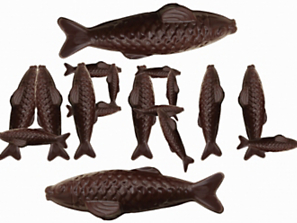
Fish-shaped confections are popular in France for both poisson d’Avril and Easter.
Poisson d’avrile is still celebrated in France—where, if you’re not careful, you could find yourself with a paper haddock stuck to your back while laughing children point at you and shout "poisson d’avril!!" (like those "kick me" signs we used to try to pin on classmates). So is the centuries-old French tradition of poisson d’avril—which is also celebrated in neighboring Italy and the former French colony of Quebec, Canada—where pulling April Fools’ Day pranks originated? C’est possible … But if it is, it had nothing to do with the Gregorian calendar kerfuffle.
Something sounds fishy about poisson d’avril …
Apparently, references to poisson d’avril have been found that predate the 1564 edict from King Charles IX of France to move the start of the calendar year from the end of March to January 1 (followed by Pope Gregory XIII’s adoption of the Gregorian calendar throughout the entire Christian world in 1582). Because poisson d’avril is mentioned in print as early as 1466, and again in a 1508 poem, people who study these things now theorize that the origins of pulling pranks on April Fools’ Day/poisson d’avril may involve actual fish.
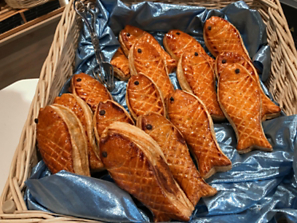
No actual fish were harmed in the creation of these poisson-themed confections.
The thinking goes that the return of spring around April 1st also marks the start of fishing season in France. This was a time of feast or famine for fishermen, who either had no fish (due to waiting for spawning fish to reach legal size) or an overwhelming abundance as the fish all rushed upstream at the same time. Those who give credence to this theory say the prank de jour back then was to hook a herring (not a paper one) on a fisherman’s back and sit back and wait until he noticed—taking special delight when the odor grew stronger by the hour.
Others deny this link to April Fools’ Day traditions, claiming that the early text references to "April fish" may just be a commentary on how fish were especially plentiful and easy to catch during this time of year. They say that without a smoking gun, one cannot pinpoint the origins of April Fools’ Day to poisson d’avril. Some smoked fish perhaps, but no smoking gun to back up this theory.
No more fishing expeditions—the first hard evidence for April Fools’ Day
If the Renaissance Flemish translation can be trusted, a 1561 poem by Eduard De Dene leaves no doubt that a tradition had been established for April 1st tomfoolery. The poem recounts how a nobleman sends his servant out on a series of meaningless errands—but the servant doesn’t fall for it, recognizing that he is being sent on "fool’s errands" because it is April 1st.
Before we go on, let’s give Eduard de Dene some credit here. More than 450 years have passed, yet his little ruse about sending someone off on a wild goose chase is still a classic April Fools’ prank! It was even mentioned in a 1902 newspaper article in the Akron Daily Democrat about some trending April Fools’ Day stunts:
"One of the most popular amusements on April 1 … is the sending of persons on fruitless errands. Unsophisticated persons are sent to the bookstores for a copy of the ‘History of Eve’s Grandmother,’ or to the chemist’s shop for ‘pigeon’s milk’ …"
A century after De Dene’s antics, British antiquarian John Aubrey made the first English reference to the holiday when he jotted down "Foole’s holy day. We observe it on ye first of April," in a 1668 book he was writing on local customs.
It’s almost like while nobody seemed to know the true origin of April Fools’ Day, they were still curious about where it came from. Among the earliest speculation about the holiday’s origin is this little ditty that appeared in an issue of Poor Robin’s Almanack, an English satirical almanac unrelated to "Richard’s," in 1760 …
The First of April some do say
Is set apart for all Fool’s Day
But why the people call it so
Nor I nor they themselves do know
While they were still pinning paper fish on people’s backs in France, April Fools’ Day pranks in the U.S. were becoming more elaborate by the late 19th century. Some of the more popular ones included placing a brick under a hat on a sidewalk, then waiting for someone to come along who couldn’t resist giving the hat a good kick—and stubbing his toe on the brick. Wallets with thin strings tied around them were also left in plain view, and the hidden prankster would yank it away when a passerby tried to grab it. Another one was known as the "smoking coin" because it was a coin that had been heated up by fire or a lit cigar—and whoever picked it up would get a nice burn.
Now we can do better than that, can’t we? Perhaps you’d like to see what some consider among the best April Fools’ Day hoaxes—including a few that went horribly wrong …
10 legendary April Fools’ Day hoaxes
Experience the rich history and traditions of France at any time of year during French Impressions: From the Loire Valley to Lyon & Paris.
Reborn from the Ashes: Notre Dame de Paris
A Grand Circle Program Director reflects on the reopening of Notre Dame Cathedral.
City of Light, City of Games: Edward’s Olympic Summer in Paris
A Grand Circle Cruise Line Program Director trades his usual Seine River tours for an extraordinary adventure as a volunteer at the Paris 2024 Olympics, offering a unique insider's perspective on how the Games are transforming the City of Light.
The Island That Can't Make Up Its Mind
A tiny river island between Spain and France has been peacefully switching nationalities every six months for over 350 years.
Get The Inside Scoop On...
Like what you see here? Receive weekly updates right in your inbox.
inside-scoopArticles In This Edition

A Tale of Three Otters

Animal Yarn

April Fools’ Day: History, Hoaxes & Ill-Fated Hijinks

Egypt, the Sphinx and a Kiss

Gods & Gags

Tales of our Fails: Associates Sound Off

Top 12: Journeys for a Summer Getaway