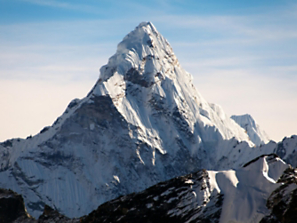
Nepali Sherpa Kami Rita just broke his own world record by summiting Mount Everest for the 31st time—making him the undisputed king of the world's tallest peak. Known as "Everest Man," Rita reached the 29,035-foot summit at 4:00 AM local time while guiding a group of Indian army officials, cementing his status as what expedition organizers call "a global symbol of Everest itself."
Rita's extraordinary achievement comes just one week after British mountaineer Kenton Cool set his own record with his 19th Everest summit—the most climbs by a non-Sherpa. But Rita's feat represents something far more significant than personal achievement; it highlights the incredible, often underrecognized contributions of the Sherpa people to high-altitude mountaineering—and raises important questions about the commercialization of the world's most famous mountain.
Conquering giants
The story of Everest climbing begins with Sir Edmund Hillary and Tenzing Norgay's historic first ascent on May 29, 1953. Hillary, a New Zealand beekeeper, became a household name worldwide. In fact, we named our loyalty club after Sir Edmund Hillary both to celebrate the adventurous spirit of our very best travelers, and to honor the memory of the man himself. The late mountaineer and humanitarian was a mentor to Harriet and Alan Lewis and a longtime friend of O.A.T. (You can learn more about this special relationship here.)
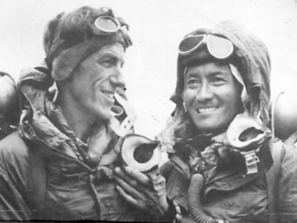
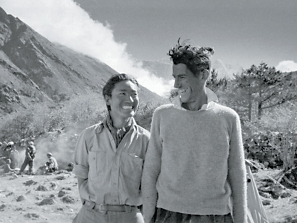
Tenzing Norgay and Edmund Hillary after successfully completing the first ascent of Mount Everest at 11.30am on May 29th, 1953.
However, truth be told, Sir Edmund Hillary couldn't have reached the summit without Tenzing Norgay—the Sherpa mountaineer whose expertise and strength were equally crucial to the expedition's success. Being the humble soul that he was, Hillary never forgot this debt of gratitude. After his famous climb, he devoted the rest of his life to giving aid to the Sherpa people of Nepal, building schools, hospitals, and infrastructure in Tenzing's homeland through his Himalayan Trust foundation. This partnership established a pattern that continues today: Western climbers achieving their dreams with the indispensable support of Sherpa guides.
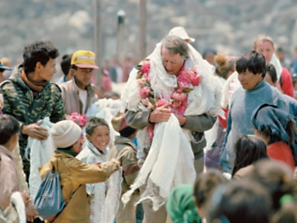
After his famous climb, Sir Edmund devoted the rest of his life to giving aid to the Sherpas of Nepal, the people of his climbing partner Tenzing Norgay.
Unsung heroes
Everest was named after British surveyor Sir George Everest, a former surveyor general of India. The tallest mountain on Earth, it has captured western imagination for over a century. However, long before westerners became obsessed with finding glory by summitting its peak, Everest went by the Tibetan name of Chomolungma (meaning "Goddess Mother of the World") or by the Nepali name of Sagarmatha (meaning "Goddess of the Sky").
Early British expeditions to Everest’s summit in the 1920s ended in tragedy, including the disappearance of George Mallory and Andrew Irvine in 1924 (in fact, many have speculated about whether Mallory and Irvine managed to reach Everest’s summit). It wasn't until Hillary and Tenzing's successful climb that humanity finally stood atop the world's roof—a moment that marked the beginning of Everest's transformation from impossible dream to achievable, albeit dangerous, goal.
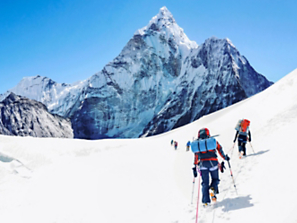
A group of climbers heading toward the Everest summit in Nepal.
Since then, the Sherpa people—originally from Tibet and now primarily living in Nepal's Solu-Khumbu region—have become synonymous with high-altitude mountaineering. Their genetic adaptation to thin air—including enlarged lungs and increased red blood cell production—makes them uniquely suited for extreme altitude work. Beyond biological advantages, Sherpas also possess generations of mountain knowledge, weather reading skills, and route-finding expertise that have made countless summit dreams possible.
Yet this sought-after role comes with devastating costs. Sherpas face disproportionate risks, carrying heavy loads, fixing ropes, and breaking trail through the mountain's most dangerous sections. The infamous Khumbu Icefall, where shifting ice blocks create a deadly obstacle course, has claimed numerous Sherpa lives. In 2014, an avalanche killed 17 Sherpas in the icefall, leading to the season's cancellation and sparking conversations about fair wages and safety conditions.
While Rita expresses pride in his achievements, he's consistently emphasized that climbing is his job—not his hobby. "I am glad for the record, but records are eventually broken," he told the press in May 2024. "I am more happy that my climbs help Nepal be recognized in the world."
Modern madness
Today's Everest bears little resemblance to the mountain Hillary and Tenzing climbed. What was once an elite expedition undertaken by small, highly skilled teams has become a commercial enterprise attracting hundreds of climbers each season. Nepal issued over 1,000 climbing permits this season alone, contributing significantly to the country's tourism economy but creating serious concerns.
Since Hillary and Tenzing summitted Everest in 1953, over 7,120 different people have successfully followed in their footsteps—and more than 340 have died trying.
The commercialization has led to "traffic jams" near the summit, where climbers wait in line at 29,000 feet—an altitude where every minute without supplemental oxygen increases danger. Social media has amplified the spectacle, with summit selfies sometimes taking precedence over safety. The mountain now faces environmental challenges too, from abandoned oxygen tanks to human waste, prompting Nepal to introduce rules requiring climbers to pack out their own waste.
Sacred ground
For all the talk about records and commercialization, there's something else going on here that's easy to miss: To the Sherpa people, Everest is sacred ground. Rita himself posted photos from a Puja ceremony, the traditional Buddhist blessing ritual climbers perform before heading up the mountain. These aren't photo ops for tourists; they're genuine prayers for safe passage on a peak that locals have revered for generations.
The mountain's dual nature—as both sacred space and commercial playground—creates ongoing tensions. Local communities benefit economically from climbing tourism but also bear the environmental and cultural costs of Everest's popularity. As climbing seasons grow more crowded and climate change alters mountain conditions, Rita's achievement reminds us that behind every Everest summit photo lies a story of collaboration, risk, and the extraordinary people who make impossible dreams possible—one step at a time.
Experience the majesty of the Himalayas and learn about Sherpa culture during our Nepal & the Mystical Himalayas adventure.