
Tunisia’s Sejnane pottery, which you are likely to encounter during Tunisia: From the Mediterranean to the Sahara, is one of several ceramic practices named to UNESCO's Intangible Cultural Heritage list.
Tunisia’s Sejnane pottery, which you are likely to encounter during Tunisia: From the Mediterranean to the Sahara, is one of several ceramic practices named to UNESCO's Intangible Cultural Heritage list.
For millennia, civilizations have been transforming the ground beneath their feet into works of art that are both personal and practical. In fact, pottery is one of the oldest known human inventions: Ever since it originated in China in 18,000 BC, people have been pinching, molding, and shaping humble lumps of clay into everyday necessities and creative representations of daily life. Countless ceramic stylings are cemented in the world’s consciousness—from Moroccan tagines (cone-shaped casserole dishes) to China’s Terra Cotta Army—but hundreds more, less-famous traditions exist around the globe.
Beyond serving practical purposes, many of these ceramic traditions are also essential to fostering local identity and preserving history. They are a tangible connection to the land, to local customs and beliefs, and to older generations of potters. What’s more, because the crafts are often produced by women, they play a key role in promoting gender equality.
However, a variety of factors—including dwindling populations; lack of access to raw materials; and demand for cheaper, factory-made alternatives—now threaten the existence of some of the more culturally significant ceramic practices. To keep them alive, UNESCO has added several of them to its list of Intangible Cultural Heritage—“living traditions … and skills passed down through generations.” Ahead, we explore five such female-led UNESCO-recognized pottery traditions:
Vietnam’s Cham pottery
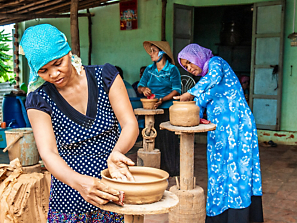
For Vietnam’s Cham ethnic minority group, pottery skills are a sacred inheritance. According to legend, the knowledge of crafting ceramics was bestowed by a god—and those ancient, divinely ordained techniques are still in use today. Rather than using wheels or turntables to spin vessels into symmetrical shapes, the craftswomen spin themselves around the clay, smoothing and polishing the surface with simple tools such as bamboo hoops, then pressing shells and flowers into the surface for decoration. The colors applied to the pottery also have natural origins: cashew nut shells, tree bark, and other organic materials are soaked in water until it’s tinted enough to stain the pieces.
Peru’s Awajún pottery
In the indigenous Awajún community of the Peruvian Amazon, pottery, people, and nature are all inextricably linked. Pots are painted with brushes made of human hair; adorned with patterns inspired by native animals, plants, and landscapes; and coated in gloss made from plant resin. While the ceramic creations serve mostly practical purposes, each piece is seen as an expression of the maker’s personality. And because Awajún women are responsible for creating the pottery, each piece is—by extension—a woman’s way of leaving her unique mark on the community.
The black pottery of Bisalhães, Portugal
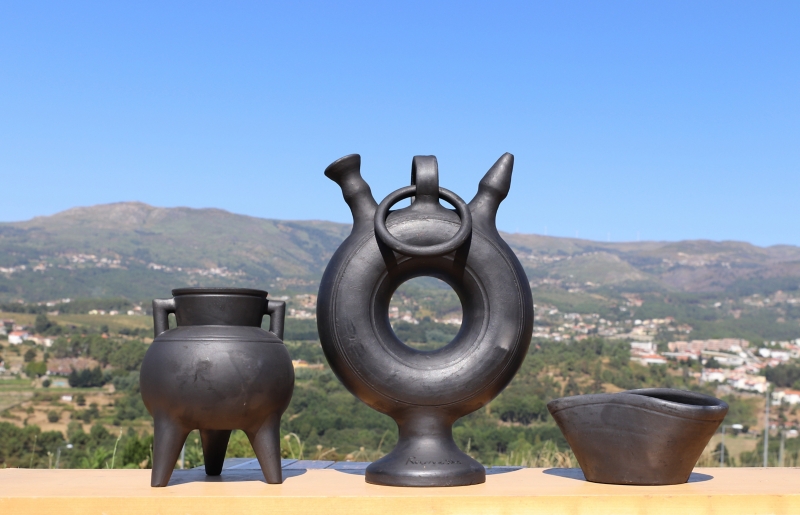
Like most materials used in traditional ceramic applications, the clay favored by the artisans in Bisalhães is locally sourced. Unlike other clays, however, it comes not directly from the ground, but rather—in true Portuguese fashion—from ceramic tile factories. During firing, the finished pieces are buried in black soil and starved of oxygen, a technique that gives the pottery its deep, onyx hue. While men are responsible for shaping the vessels, women add the final decorative flourishes. The resulting creations are visually striking—and are the favored serve-ware of restauranters in the surrounding Douro Valley. However, each piece is extremely precious, as only five artists remain with the knowledge to continue the craft.
Pottery of Botswana’s Kgafela community
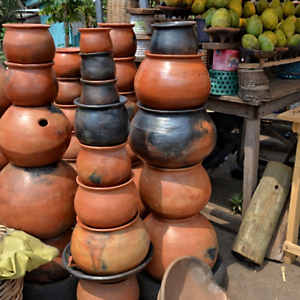
For the craftswomen of Botswana’s Kgafela community, pottery is a spiritual practice as much as a practical one. When gathering the raw earth to make the clay, the female master potter communes with her ancestors, who are believed to guide her to the ideal source. Once shaped and fired, the pots complete their sacred circuit: Select pieces are reserved for ancestral worship, while others are used in traditional healing rituals. A lucky few are selected for the most hallowed of household duties—storing beer.
Pottery of Sejnane village, Tunisia
In this desert-rooted tradition, craftswomen extract clay from wadis—dry riverbeds that fill with water only after rare rains. Pots are adorned with motifs drawn from traditional tattoos and Berber weaving, further linking each piece to its cultural heritage. Alongside vessels for the home, potters also create ceramic dolls and animal figurines. This is the only tradition in the group not considered endangered. In fact, it receives government support and time in the spotlight: Each year, women present their work in exhibitions in the capital of Tunis. Still, it is not without challenges: Vendors keep prices low—arguing that the source material is free—and many craftswomen sell only a handful of pieces annually. But by adapting their designs to modern tastes and needs, these women continue to evolve the craft.
Keep an eye out for Sejnane pottery in Tunis and beyond on our Tunisia: From the Mediterranean to the Sahara adventure.
You’re in Good Hands… With O.A.T.
When an O.A.T. traveler's knee unexpectedly gave out in Tunisia's ancient medina, a swift response and comprehensive medical support not only saved their vacation but demonstrated why you're truly "in good hands with OAT"—even in the most remote corners of the world.
Tunisia… Always an Exotic Adventure!
This traveler adventured through Tunisia many years ago, returning with O.A.T. in 2009 to experience the magic of the country again.
Introduction to Travel
Join Bonnie Mack on a 55-year journey fueled by wanderlust, as she shares colorful stories from her global adventures, inspiring others to explore the world with her tales of humor, mishaps, and unforgettable encounters
Get The Inside Scoop On...
Like what you see here? Receive weekly updates right in your inbox.
inside-scoopArticles In This Edition

Communing with Gods at the Center of the Earth

Culture Club

Early Arrival, Extra Culture: Street Food & Kabuki in Tokyo

On Trend: Top 10 Journeys by Land, Sea & River

The Culture of Dirt

Where in the World?