
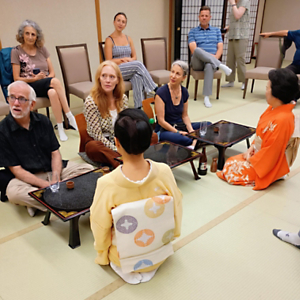
Author Carol Bowman (third from left) with her husband, Ernie; son; and daughter-in-law during their meeting with a geisha on Japan’s Cultural Treasures.
Author Carol Bowman (third from left) with her husband, Ernie; son; and daughter-in-law during their meeting with a geisha on Japan’s Cultural Treasures.
Carol initially published this piece on Go World Travel; we reprint with permission here. Do you write about your travels in local publications? Share a link with us in an email to [email protected].
By Carol L. Bowman, 19-time traveler from Spring, TX
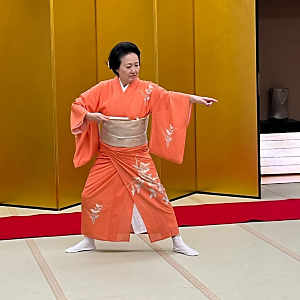
Her voice sounded melodic, soft, and soothing. She glided across the tatami mats, dancing traditional steps that she has performed thousands of times. Her apprentice, fresh with youth and wearing a face of innocence and a colorful kimono, plucked the three-stringed shamisen instrument. We looked on with fascination, as we enjoyed the rare opportunity of learning about the life, skills, and challenges of the modern-day geisha.
This iconic symbol that represents Japanese culture elicits, perhaps, the most misunderstood concepts of any profession exclusive to Japan. No counterpart exists in any other world society, to these elegant, sophisticated women whose sole purpose is to provide costly, private entertainment through the hospitality mediums of musical instruments, dance, tea ceremonies, and conversation.
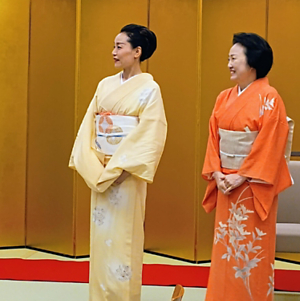
The mere mention of the word “geisha” conjures up a universal image: beautiful, mysterious women who give the aura of human porcelain dolls. White powdered faces devoid of noticeable flaws glow from tinges of rosy cheeks. Stark black makeup around the eyes and brows gives a striking contrast. Deep red lipstick applied to the lower lip of trainees signifying purity or both lip layers for the older, more experienced geisha adds a punch of color. Shimada style wigs, silk kimonos, obi sashes, and red-strapped okobo sandals create the likeness of graceful, Japanese idols.
The history of geisha tradition in Japan, too complex and detailed to unravel here, dates back to the 17th century when women took over the role. In the 1920s, 80,000 trained geisha provided entertainment, but today, due to dwindling demand, that number has tumbled to just over 1,000. There are five regions in Japan where geisha customs still live on: Tokyo, Hakone, Kanazawa, Kyoto and Osaka. Every hanamachi, the districts within each city where the geisha live in communal lodges or okiya, and work in teahouses called ochaya, operates with different rules.
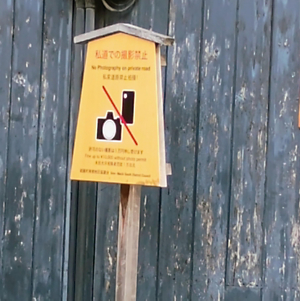
Kyoto, the birthplace of the geisha tradition, has enacted laws to protect these women from the surge of fascinated tourists flooding the geisha district of Gion. Posted signs restrict taking any photos of experienced geisha, called geiko, or young, apprentices called maiko. There is a regulation in all districts that prohibits intrusion or any physical or sexual contact with the geisha during or after the entertainment of song, dance, and serving drinks or tea.
In Kyoto and the other provinces, interaction with geisha by foreign tourists is rare if not impossible. Clientele who reserve time for personal attention from geisha at the local ochaya are carefully screened and are usually referred by regular customers. About 70% of patrons are CEOs of Japanese companies.
Fortunately, the hanamachi in Hakone, the mountain, hot spring resort town outside of Tokyo, has taken a different approach to the survival of the geisha tradition. Located within in the Fuji Hakone Izu National Park, the Hakone Yumato Geisha Association, consisting of 120 geisha, created a program that has made Hakone one of the most popular tourist destinations in Japan. Here, the public can meet, experience, and learn about the challenges facing the modern day geisha through organized public events and special presentations for individuals or groups.
It was within this context that our small cluster of O.A.T. travelers had the opportunity to spend a captivating afternoon with a retired geisha, now acting as a madam, or “mother” teaching the young girls in apprenticeship and a young woman who had recently achieved the level of professional geisha. They answered our curious questions through our guide as interpreter, demonstrated a traditional tea ceremony, played musical instruments, and showed us the customary moves of ancient dance.
Meeting Anzu Matsuyoshi, who remains an icon in the geisha community here, was an honor. As a professional geisha in Hakone for 38 years, she now trains young women and attempts to correct any misconceptions about geisha tradition through interviews and international videos. She related her unique story:
“As a young girl working in an office in Gunma, Japan, I wanted to see other parts of the country. An ad in a magazine offered the prospect of a hospitality job, which included housing, salary, benefit package, and retirement fund and it was located in the beautiful Hakone Mountains near Mt. Fuji. I was very fortunate to be accepted into this wonderful organization of women and I have devoted my life to this tradition. Only in Hakone, do geisha belong to a union; the Geisha Arts Association takes care of all our needs and each woman is afforded a retirement pension.”
Anzu explained that girls as young as 14 are accepted for training, which lasts for a period from two to six years. They must live in an okiya under the guidance of the headmaster or “mother” and must learn the art of song, dance, and playing Japanese musical instruments such as the koto and shamisen. Some clients often frequent the services of their favorite geisha for a familiar sympathetic ear to their problems and anxieties. Anzu related that the art of conversation, listening, and consoling the client can become a major part of the experience. In general, geisha provide an atmosphere of pleasurable entertainment: games, song, music, dance, conversation, and beverage services, but taking on the role of therapist remains a required skill.
As I watched them perform and personally interact with members of our group, I couldn’t take my eyes or ears from their soft-spoken, gentle words, their smoothly flowing gestures and graceful movement, and their constant facial expression of wanting to please. I couldn’t imagine them ever raising their voices, saying negative words, or making awkward motions. I couldn’t fathom being able to be this controlled. Geisha, I learned, have an incredibly difficult job: to interrupt the rigors of everyday life and replace them with the pleasures of refined hospitality.
Sit down with a geisha in Hakone and help challenge Western preconceptions of her art during Japan’s Cultural Treasures.
To Bee or Not to Bee: A Day in the Life at Moka Honey Farm
Away from the tourist crowds, this hands-on beekeeping experience proved an unforgettable highlight.
Early Arrival, Extra Culture: Street Food & Kabuki in Tokyo
Read a traveler’s advice on making the most of an early arrival in Tokyo, Japan.
Soaking It All In: Bathing Traditions Around the World
Across the world, bathing rituals offer a shared tradition of relaxation and renewal.
Get The Inside Scoop On...
Like what you see here? Receive weekly updates right in your inbox.
inside-scoopArticles In This Edition

Adventures That Fit Your Schedule: NEW Trips in Under Two Weeks

Airwave Academy

Conversation with a Geisha

Meet Solomon: A Story of Hope

Our Writers on Writers

Tomb Grader

Welcome to O.A.T. University! What’s Your Major?