In the video above, learn about making palm sugar from the palm tree, the national tree of Cambodia, with Sem "Ray" Sopheara, Trip Experience Leader on Ancient Kingdoms: Thailand, Laos, Cambodia & Vietnam—and learn more about this important natural resource below.
More than just an iconic feature of the Southeast Asian landscape, particularly in rural areas, the sugar palm tree is both a natural resource and national treasure for the people of Cambodia. "The sugar palm is deeply rooted in Cambodian tradition, art, and literature," says Sem "Ray" Sopheara, Trip Experience Leader on O.A.T.’s Ancient Kingdoms: Thailand, Laos, Cambodia & Vietnam adventure. "It always appears in traditional songs, poems, and proverbs, and is closely associated with the Khmer identity and way of life."
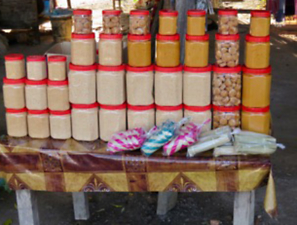
Different types of palm sugar for sale in Cambodia.
The Khmer ethnic group comprises more than 95% of the Cambodian population, the majority of whom reside in rural areas today. Once you understand just how useful the sugar palm is to these resourceful people, its cultural significance makes perfect sense. "Every part of the tree is very useful," says Ray. "Its sap is used to make palm sugar and wine, while the leaves are used for roofing and weaving mats, baskets, and walls."
As most modern-day Cambodians still believe in the power of traditional medicine, the sugar palm is also a cherished ingredient among shamanic healers. "The roots are used in traditional medicine," says Ray, including but not limited to the treatment of fever. Many modern applications of herbal ingredients date back centuries—a history preserved by ancient Ayurvedic texts written on (you guessed it) palm leaves.
Other types of palm trees are found throughout Southeast Asia. Vietnam, for example, relies more heavily on the coconut palm, as well as the areca—prized for its nuts, which are chewed along with betel leaves as a popular (and intoxicating) social ritual. In Laos, the rattan palm is also common. But in Cambodia, the sugar palm reigns supreme—so much so that in 2005, it became the national symbol of Cambodia by royal decree.
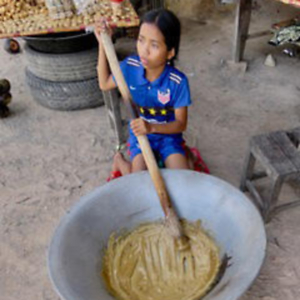
A local vendor stirs palm sugar—a laborious
process that takes hours.
As you can see in Ray’s video, harvesting palm sugar is not for the faint of heart—but, as Ray jokes, the harvesters don’t need to set foot in a gym to maintain their physiques! Different processing methods are used to make sugar for specific cooking applications—or, as Ray happily demonstrates, to make candy in its purest form. Perhaps the most delicious use of all? Dessert. We asked Ray to share his favorites. "Jeak kteas (banana, coconut milk, and palm sugar) and nhom bangkp skar (sticky rice dough wrapped around palm sugar) are both yummy!"
Learn about the significance of the sugar palm and taste its bounty in local cuisine during Ancient Kingdoms: Thailand, Laos, Cambodia & Vietnam.


