In the video above, join Jin Panyalert, Trip Experience Leader for Discover Thailand: Bangkok to Chiang Rai, on a jaunt through the stalls of one of Bangkok’s colorful produce markets, and meet a nimble-fingered florist who transforms a lotus flower into a Buddhist offering. Read on to learn more about the symbolism behind this beautiful bloom.
Fans of the HBO series The White Lotus, most recently set in southern Thailand, may not associate most of the show’s characters with purity or spiritual rebirth (spoiler alert: these people tend to be as impure as they come!). But in Buddhist tradition, those are just two symbolic themes associated with the titular flower—an irony surely not lost on the show’s creators.
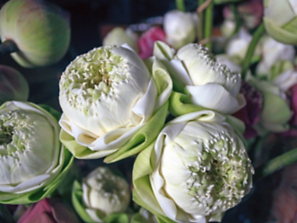
Every color of lotus has its own distinct meaning, with white symbolizing purity of mind.
The lotus features prominently in early Buddhist writings: While carrying Lord Buddha in her womb, Queen Maya Devi dreamed of a white elephant holding a white lotus, and when Buddha was born, a lotus flower sprouted everywhere he stepped. As for why the lotus lends itself so well to symbolism, the roots lie not just in its beauty, but in how and where it grows.
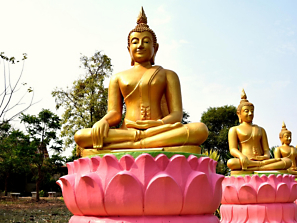
Buddha is often depicted sitting or standing atop a lotus flower to symbolize his enlightenment.
When a lotus flower blooms on the surface of a pond, its serene blossom is all we see—but beneath the surface, the plants grow in murky, muddy darkness. At night, the lotus retreats to the depths, only to emerge perfectly clean the next morning. This ability to transcend darkness with beauty represents the resilience of the human spirit: Life, according to Buddhist teaching, is the flower, while the muddy floor symbolizes life’s daily challenges.
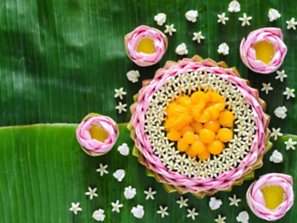
Lotus flowers are used to create serving vessels for weddings and other auspicious ceremonies.
The act of rising above hardship also means letting go of an attachment to material things—which is essential to achieving nirvana. From the early seed stage to first bud to final blossoming, the life cycle of the lotus mimics that of a person reaching enlightenment.
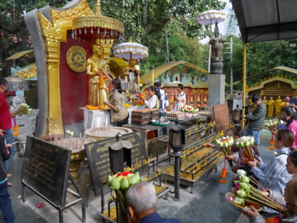
At Thai temples, an offering of lotus flowers shows respect for Buddha’s teachings.
No wonder, then, that the lotus is seen frequently in Buddhist art, literature, and rituals. Buddha is often depicted sitting or standing on a lotus flower, symbolizing his enlightenment. In yoga, the folded-legged lotus position is one of the most common positions for meditation. At Buddhist temples, along with candles and incense, lotus flowers are typically offered to show respect and gratitude. Folding the petals—as Jin demonstrates in her video—strengthens the offering by enhancing the beauty of the flower.
So the next time you encounter the image of a lotus—whether or not you’re a fan of the popular show that bears its name—consider the symbolism behind it. Perhaps it will inspire you to rise above whatever muddy water is clouding your daily life.
See the ubiquity of the lotus firsthand—and perhaps visit Bangkok’s flower market—when you join O.A.T. for Discover Thailand: Bangkok to Chiang Rai.


