In the above video, get an overview of the itinerary of our NEW! Peru's Nazca Lines & Amazon Rain Forest adventure, which visits both tribes discussed below.
A vast expanse of biodiversity, the Amazon rainforest stands as a living, breathing natural wonder. Scientists often refer to this great verdant tract as the "Lungs of Planet Earth," generating around 16% of oxygen produced on land and accounting for more than half of the planet's remaining rainforest.
For millennia, the Amazon has been home to an extraordinary array of life. It houses more than half the world's species of plants and animals, as well as diverse Indigenous peoples. Deeply rooted in their environment, these communities have cultivated unique cultures and sustainable practices—mastering ways of life that allow them to thrive and flourish within one of Earth's most complex ecosystems.
Unfortunately, the arrival of European colonizers in the 16th century marked the beginning of a tumultuous period for these ancient societies. Faced with diseases, slavery, and violent conflicts, many Amazonian tribes saw their populations decimated and their traditional lands encroached upon. Despite these challenges, numerous Indigenous groups have managed to preserve their unique identities, languages, and customs, adapting to changing circumstances while maintaining their deep connection to the forest.
Today, over 350 Indigenous groups call the Amazon home, each with its own distinct culture and traditions. Among these are the Yagua and Maijuna peoples of Peru, two communities that continue to navigate the delicate balance between preserving their heritage and engaging with the modern world. Let's explore the histories and cultures of these two groups—both of which welcome visitors from O.A.T. on our New! Peru's Nazca Lines & Amazon Rain Forest adventure.
The Yagua: Keepers of Ancient Traditions
Historically known as the "Red People" due to their traditional use of achiote-based body paint, the resilient Yagua people have faced numerous challenges since European contact but have managed to maintain many of their ancestral customs.
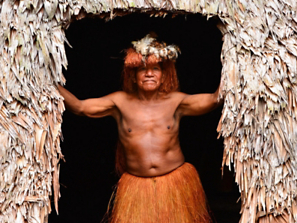
A Yagua man in traditional attire.
With a population of around 6,000, the Yagua are one of the larger Indigenous groups in the Peruvian Amazon with communities scattered throughout the region—primarily along the Amazon and Napo rivers. The Yagua language, part of the Peba-Yaguan family, is still spoken by many community members (though Spanish is increasingly common, especially among younger generations).
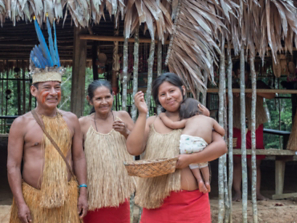
A Yagua family.
In addition to their characteristic body paint, another iconic aspect of Yagua culture is their traditional attire. Made from palm fibers, their distinctive grass skirts and shirts not only serve as practical clothing in the humid rainforest but also hold cultural significance—these garments are crafted using time-honored techniques passed down through generations. Yagua craftsmanship with palm fibers can also be observed in the baskets, mats, and other household items they skillfully weave.
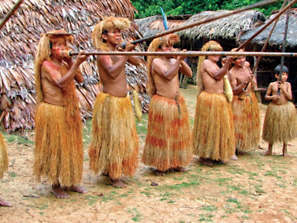
Watch out, Indiana Jones!
And if you've ever watched an adventure movie and thought, "Surely those Amazonian blow darts are just Hollywood hype," then prepare to be pleasantly surprised (or perhaps a tad concerned, depending on your stance on projectiles). The Yagua people are indeed renowned for their exceptional skill with blowguns, which they use for hunting small game. These weapons—some reaching lengths of up to nine feet—require great precision and are often decorated with intricate designs. The darts used in these blowguns are typically tipped with curare, a potent plant-based poison that paralyzes prey. Their knowledge of local plants isn't just for killing, though—they also use these elements to create medicine, with a vast pharmacopeia of herbal remedies used to treat various ailments.
Despite the pressures of modernization, many Yagua communities strive to maintain their traditional social structures and spiritual beliefs. For example, the cocamera (or ceremonial meeting house) remains a central part of community life, serving as a gathering place for important discussions, rituals, and celebrations.
The Maijuna: Defenders of the Forest
The Maijuna—also known as the Orejón—are a smaller Indigenous group residing in the northeastern Peruvian Amazon. With a population of only about 500 individuals spread across four communities, the Maijuna have faced significant challenges in recent decades but have emerged as powerful advocates for forest conservation.
The Maijuna language, part of the Western Tucanoan family, is considered critically endangered. However, recent efforts by the community—in collaboration with linguists and anthropologists—have aimed to document and revitalize the language among younger generations.
Traditionally, the Maijuna were semi-nomadic hunter-gatherers, moving through large territories in the forest. Their deep knowledge of the Amazon ecosystem allowed them to sustainably harvest a wide variety of plants and animals for food, medicine, and other uses. Today, while many Maijuna have adopted more settled lifestyles, they maintain strong connections to their ancestral lands and traditional ecological knowledge.
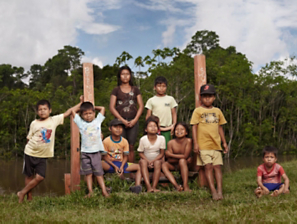
Children from a Maijuna village.
One of the most remarkable achievements of the Maijuna in recent years has been the establishment of the Maijuna-Kichwa Regional Conservation Area. Covering over 1,500 square miles, this protected area represents a significant victory in the community's efforts to preserve their ancestral lands from threats such as logging and oil exploration.
Indeed, the Maijuna have embraced innovative conservation techniques to monitor and protect their lands. Their camera trapping program, for instance, allows them to track wildlife populations and gather valuable data on rare and endangered species. This initiative not only contributes to scientific understanding of the Amazon ecosystem but also empowers the Maijuna to take an active role in managing their territory.
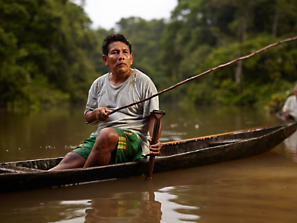
Maijuna tribe man fishing aboard a handmade raft.
Another fascinating aspect of Maijuna culture is their relationship with stingless bees. These bees, known locally as "angelitos" (or "little angels"), produce a highly prized honey that the Maijuna have harvested for generations. In recent years, the community has developed sustainable beekeeping practices, allowing them to produce and sell this unique honey as a source of income while maintaining the ecological balance of their forest home.
Like the Yagua, the Maijuna are also known for their intricate palm fiber weaving, creating beautiful baskets, bags, and other items that often incorporate designs inspired by the flora and fauna of the Amazon.
Preserving Ancient Wisdom in a Changing World
The Yagua and Maijuna peoples—like many Indigenous communities in the Amazon—face ongoing challenges as they strive to maintain their cultural identities in an increasingly globalized world. However, their resilience, adaptability, and deep connection to the forest continue to inspire and inform conservation efforts throughout the Amazon basin.
By sharing their knowledge and welcoming respectful visitors, these communities not only preserve their heritage but also raise awareness about the importance of protecting the Amazon rainforest. Their stories remind us of the intricate relationship between cultural and biological diversity, and the critical role Indigenous peoples play in safeguarding our planet's most precious ecosystems.
To learn more about the Yagua and Maijuna peoples and experience their rich cultures firsthand, embark on our New! Peru's Nazca Lines & Amazon Rain Forest adventure.


