Question: Not as iconic as Africa’s "Big 5," what are the warthog, hyena, Marabou stork, wildebeest, and vulture collectively known as?
Answer: "The Ugly Five."
Most people with dreams of experiencing a game-viewing safari in Africa know the "Big 5." Spotting all five of these majestic animals—lion, leopard, elephant, Cape buffalo, and rhino—is often the ultimate goal of many safari-goers. Not all of them realize that the term "Big 5," however, doesn’t really refer to the animal’s size. Although they are all quite large, 19th-century European big game hunters came up with the term to identify the five most difficult—and dangerous—animals to hunt on foot. And if said hunter misses or just wounds one of the "Big 5," there was an implicit understanding that their next trophy hunt might be in that big game park in the sky.
And then there’s the "Ugly 5." Unlike the majestic specimens that make up Africa’s "Big 5," the members of this exclusive group share countenances that only a mother could love. And they certainly weren’t among the trophy animals those big game hunters wanted to see hanging on the walls of their smoke-filled lodges.
The African plains teem with some of the most majestic wildlife on the planet, an Eden-like paradise of countless species of every size and description. But it sure can get ugly out there … So, who are the "Ugly 5" of the African bush?
- Warthog
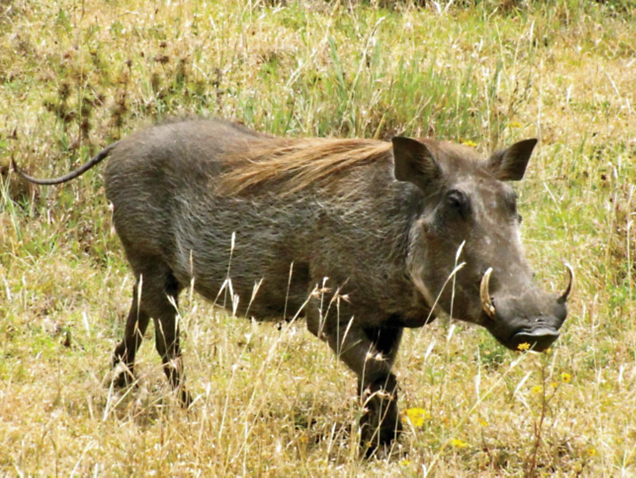
It should come as no surprise that these wispy-haired wild pigs with two sets of tusks and a Mohawk-like mane running down their backs made the list. The fact that their short necks and relatively long legs make them have to kneel in order to eat doesn’t add to their attractiveness, either. And when they run (surprisingly, up to 35 miles an hour), their long, thin tails stick straight up in the air. By the way, the "wart" in their name refers to the fleshy growths on their face that protect them in fights. But really, when "wart" is right there in your name, you were probably never going to be the handsomest fellow at the waterhole.
- Wildebeest
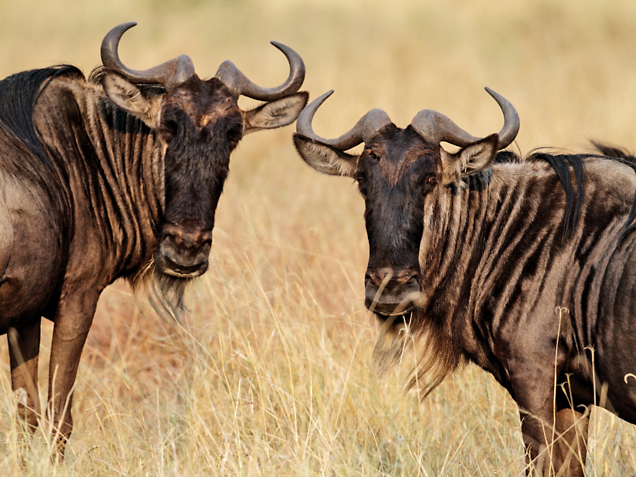
Also known as a gnu, wildebeest are members of the antelope family (although it’s doubtful that other antelopes admit to this). The largest and least attractive of the antelopes, wildebeest appear to be created from leftover parts of other animals—a little horse here, some buffalo there, and bits of antelope all over. Their beauty may all be on the inside, however, because they sure do attract lots of predators. But at least they’re better looking than warthogs.
- Hyena
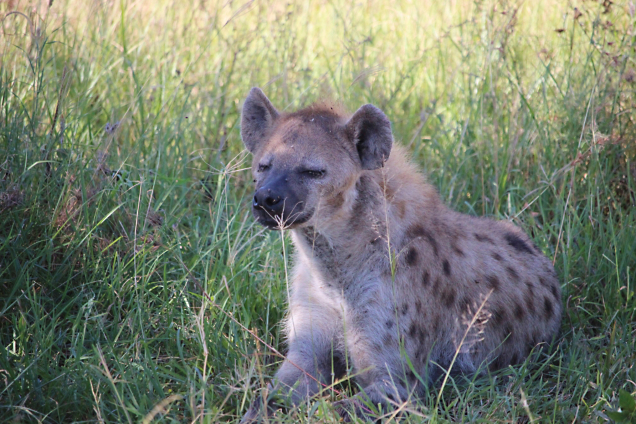
They say that baby hyenas are actually very cute. But they must grow out of it fast, because their sloped backs, aggressive demeanor, and overall unkempt appearance is not a good look. Not members of the cat or dog family, hyenas are in a class of their own. Their powerful jaws and teeth let them go through bones, horns, and even hooves of carcasses left by other predators. They’re also one of the noisiest animals in the bush, and nobody’s laughing when their distinctive whooping—which starts out low and rises to a high-pitched scream—pierces the night air. They do have an unfair reputation as being pure scavengers, however, as hyenas are excellent nocturnal hunters. Just not very handsome ones.
- Vulture
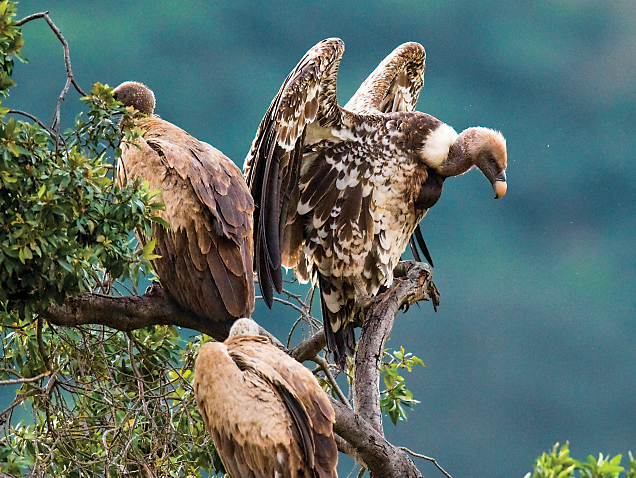
Even if they were better looking, vultures deserve a spot in the "Ugly 5" list. The clean-up crew of the African plains, these bald-headed scavengers are capable of staying aloft for hours at a time, then swooping down and using their powerful hooked beaks to tear into hide, muscle, and bone of a carcass—gorging themselves until they’ve had their fill. They will attack sick or dying animals, but usually just feast on the dead. Since their powerful and corrosive stomach acids are going to kill any dangerous bacteria, vultures don’t have to worry about dining on rotting carcasses well past their "best by" date. Another unattractive habit is how they cool off on hot days by urinating on their legs and feet. Let’s be honest, it’s repulsive enough just seeing vultures circling in the air and knowing there’s likely to be a bloody kill waiting below.
- Marabou stork
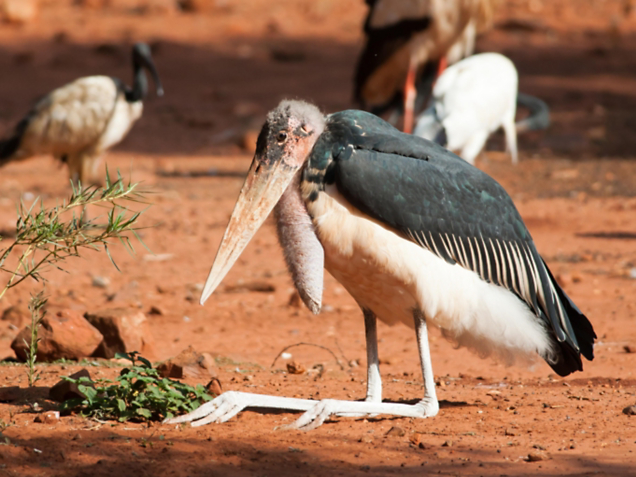
The second bird to make the list is certainly worthy to "carrion" the tradition. These five-foot tall scavengers with close to 10-foot wingspans are among the largest birds in the world. And their pink and featherless head and neck, enormous conical bill, and a fleshy pouch under the neck make them among the ugliest, too. And the marabou stork’s nickname—the undertaker bird—doesn’t help. They’re often seen sharing carcasses with two other members of their exclusive club—hyenas and vultures. They also have hollow legs and feet that make it easier for them to fly. And speaking of legs, you know vulture’s charming habit of urinating on their legs to cool off in the hot African sun? Marabou storks defecate on theirs.
Four Fun Facts About Africa’s Wildlife:
- The most dangerous member of the "Big 5" is the one you least expect—They may look like gentle cows grazing in a pasture, but the Cape buffalo is the one to watch out for on safari. Usually, when animals are about to attack, they give some type of warning—a growl, roar, or mock charge. Not these guys. Still as a statue, they will suddenly charge (they never flee and always charge). And when the head goes down, that’s it. Back in the day, Cape buffalo killed more big game hunters than any other African animal.
- Lions take great pride in their roar—A lion’s roar is loud, very loud. It’s been measured at 114 decibels and can be heard more than five miles away. People feel physical pain at about 120 decibels, so if you get too close, it’s going to hurt. But you probably won’t get too close—a lion’s eyesight at night is eight times better than humans. They have good ears too, and can hear prey from a mile away.
- You might need a Lion’s eyesight to spot the "Little 5"—Yes, it’s a thing. The Ant Lion, Rhinoceros Beetle, Buffalo Weaver, Elephant Shrew, and Leopard Tortoise are collectively known as the "Little 5." Not exactly rare, they’re just … small. The Leopard tortoise isn’t all that small, but the camouflage provided by its patterned shell makes it difficult to spot. And pound for pound (or maybe gram for gram), the Rhinoceros beetle is the strongest animal in the world—it hauls loads the equivalent of a human bench pressing 65 tons at the gym.
- And finally, there’s the "Shy 5"—Like those missing photos in your old High School yearbook, this camera-shy group includes the meerkat, the aardvark, the porcupine, the aardwolf, and the bat-eared fox. Except for the meerkat, the rest of the "Shy 5" are nocturnal animals and much harder to spot than the "Big 5." If a predator thinks the shy porcupine looks like an easy meal, they quickly change their tune when it charges in reverse and drives its sharp quills into their face. Very few carnivores will go after a porcupine a second time.
Spot the "Ugly Five," "Big Five," and everything in between during a game-viewing drive on our Kenya & Tanzania Safari: Masai Mara to the Serengeti adventure.


