
While the size of some termite mounds is impressive alone, wait until you learn what happens inside. See these engineering marvels during Ultimate Africa: Botswana, Zambia & Zimbabwe Safari.
While the size of some termite mounds is impressive alone, wait until you learn what happens inside. See these engineering marvels during Ultimate Africa: Botswana, Zambia & Zimbabwe Safari.
Question: The cooling strategy of what creatures inspired engineers to develop more energy-efficient buildings in hot climates?
Answer: Termites
From the outside, those giant termite mounds scattered across the African savanna may not look like engineering wonders. But it’s a whole different story inside. Beneath that thick outer shell is a carefully designed network of tunnels, vents, and chambers that regulate the temperature and humidity—something that is crucial for the colony’s survival. Put another way, they’re air conditioned.
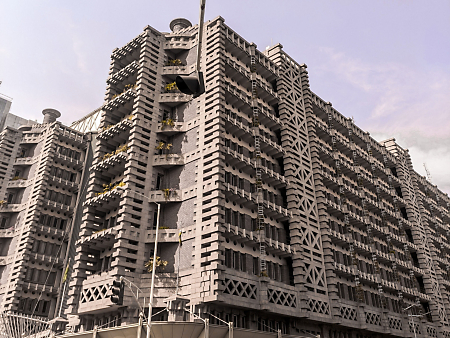
The scorching sun of southern Africa results in extreme temperature fluctuations. Because termites are highly sensitive to temperature changes, the natural ventilation system they managed to engineer inside the mound enables the colony to maintain an optimal climate for everything from nurturing young termites to storing food. This wasn’t lost on human engineers and architects, who were inspired by termite mound construction to design smarter, less energy-intensive buildings—especially ones that stay cool with minimal air-conditioning. Let’s take a closer look at those ...
Mighty termites and their muddy mounds
Let’s face it, no one comes to Africa for the termites. But they’re one of the main reasons why we even get to see magnificent wildlife like lions, herds of elephants, and towering giraffes. Termites play an oversized role in the ecosystem by breaking down all the dead trees, grass, and plants and turning it into fertile soil. It’s a process that recycles nutrients back into the ecosystem, which supports new plant growth. All the new growth indirectly supports herbivores who rely on plants for sustenance. Southern Africa’s termites serve as nature’s clean-up crew, ensuring that organic material fuels the growth of new life.
Of course, beyond their role in maintaining the landscape for African wildlife, termites are a part of the food chain themselves. They’re an essential part of the diet of aardvarks and many species of birds in the African savanna. For creatures like the pangolin, whose long tongues are ideal for slurping up the tiny insects, a termite colony is better than an all-you-can-eat buffet in Las Vegas. So, how do tiny termites manage to build such huge structures, anyway?
For termites there’s strength in numbers
Actually, you could probably pose that same question to the builders of the Egyptian Pyramids, but let’s stick to termites. Individual termites are barely the size of an ordinary black ant, yet their mounds can reach 15 feet (and much higher) and are so durable they can last 100 years (and much longer). But a mound isn’t built by individual termites—or even some specialized termite construction crew. Like ants, bees, and other social insects, termites live in societies consisting of one to two million individuals who all work together as one “super-organism,” with all their responsibilities including mound-building encoded in their tiny brains. In addition to their regular daily duties, construction of the mound may take four or five years to complete. And with heavy downpours that often destroy up to a third of the structure, constant rebuilding is also necessary.
Contrary to popular belief, the giant spires of the mound structure we see above ground aren’t some fancy high-rise termite apartments. The termite living quarters are all several feet below ground. It was once thought that the visible spires worked like chimneys, drawing hot air up and out to keep the colony cool. But the latest research indicates they act more like lungs designed to serve the respiratory needs of the subterranean colony. The mound is able to “inhale and exhale” through the walls, which appear to be solid but are actually porous.
Inside the mound and well below ground is where all the action is. The colony itself is a highly organized, well-oiled machine comprised of workers, soldiers, and reproductive members, all with clearly defined roles. The worker termites gather food and tend to the queen. The white soldier termites have large mandibles they use to fend off predators and defend the mound. The role of the queen, the largest member, is to ensure the survival of the colony by producing thousands of eggs each day—and with a lifespan of up to 45 years, we’re talking hundreds of millions of them. The strict division of labor allows termites to thrive and meet almost any challenge. In fact, the way their organized behavior enables them to build complex structures with no central control is the subject of ongoing studies for possible applications in human systems and algorithms for use in robotics and AI.
Mandible maintenance
A typical termite mound holds about 33 pounds of the little critters. While building the mound, they’ll move more than 500 pounds of soil and several tons of water. They’re big eaters, too—some termites consume as much grass each year as a thousand-pound cow. If a section of the mound collapses or is breached, masses of worker termites fill their mouths with dirt, rush to the scene, and can usually have any damage repaired within an hour or so. How do they even know when there’s a hole in the mound? They communicate with each other through touch and vibrations. When there is an outside disturbance, studies also suggest they respond to slight air movements and changes in humidity. While the workers run to patch a hole, those mandible-enhanced soldier termites fan out ready to do battle.
The mound itself (prepare to say “ew”) is constructed out of a mixture of soil, termite saliva, and dung. Although it appears solid, as mentioned earlier, it’s actually quite porous, which allows the outside air to enter and permeate the entire structure. At the base of the mound, there are several openings where the termites enter and exit and often make night forays to collect food when the air is cooler. As one can imagine, a city of hard-working termites requires a lot of food, which is why the mound features so many storage chambers for wood, its primary food source. But they also cultivate huge fungal gardens, which are located in the main nest area. They eat this fungus to help them extract nutrients from all the wood they eat. Just like the termites themselves, the maintenance of these fungal gardens requires precise temperature controls. Along with repairing breaches, termites also spend lots of time “remodeling” the structure of the mound to adapt to changing temperatures, ensuring that their home remains cozy and climate-controlled at all times.
The queen, who can grow to the size of a finger, gets her own royal chamber located near the bottom of the mound. Pretty much immobile, worker termites transport her eggs to one of several chambers (all separated by thin walls), where a dedicated nursing corps tends to and feeds the larvae at various developmental stages until they reach adulthood.
Who would have thought that lowly termites had a thing or two to teach to our brightest structural engineers? Because they have been refined over millions of years, nature holds the solutions to many modern problems. Architects and engineers, especially, can create structures that better harmonize with their surroundings and minimize their ecological footprint by looking to nature.
More fascinating facts about termites—and other examples of “biomimicry”
While termites are certainly fascinating, seek out many more attractive species during Ultimate Africa: Botswana, Zambia & Zimbabwe Safari.
Function Over Fashion
Why do zebras have stripes?
Under the Banner of Freedom
What nation entered the 1964 Summer Olympics as one country and left it as another?
Ain’t No Sunshine
What happens all day, every day of the year in the Victoria Falls Rainforest that happens nowhere else on earth?
Get The Inside Scoop On...
Like what you see here? Receive weekly updates right in your inbox.
inside-scoopArticles In This Edition

Animal House

Announcing 2027 Summer Sailings on 4 Small Ship Adventures

Gelato! And Other Frozen Italian Delights

Keep Your Cool on These 10 Summer Journeys

Losing Sleep

Of Sand and Fog: Namibia’s Desert Survivors

Beat the Heat: Advice from O.A.T. Associates