In the video above, catch a glimpse of all that Amsterdam has to offer with Trip Experience Leader Andrea Kramarova, from its proud bike culture and expansive network of canals, to its curious street food offerings such as raw herring with pickles and onions. Visit Amsterdam during Essence of Europe: The Netherlands to Switzerland, and learn more about the evolution of its Canal District below.
Though it’s perhaps difficult to imagine today, the city of Amsterdam was once a vast swampland. The city’s name derives from the medieval Dutch aeme stele redamme, or “watery dam.” Originally, a few major canals were dug to help the flow of water and create structure around the patches of land. But in the 17th century, the city charged into a Golden Age of economic prowess, prompting the need for bigger urban spaces and easily accessible ports.
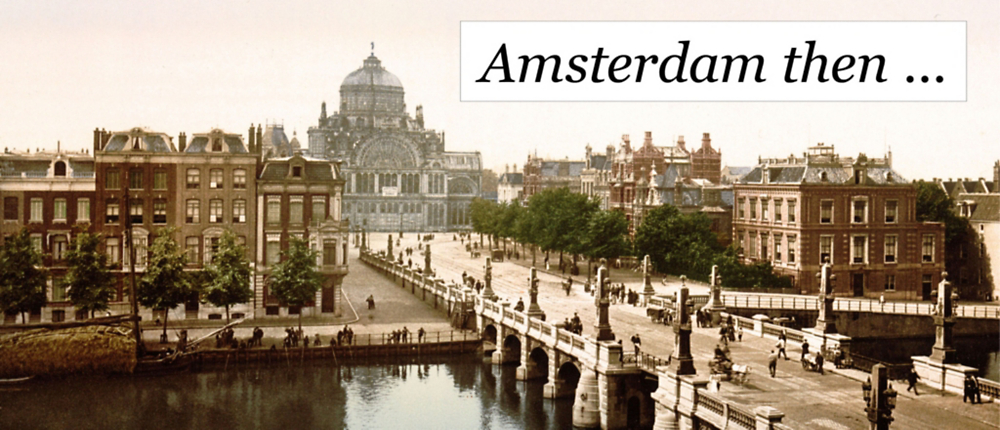
Amsterdam had become known as a trade hub by the late 1500s, and the city’s population had nearly doubled. To ensure Amsterdam structurally reflected its increasing prosperity, city planners began an expansion project starting with the main canals at the city’s border, Singelgracht.
Over the course of the 16th and 17th centuries, the swamp was gradually drained in order to create additional canals that connected the city center to the Singelgracht. The complex system forged pathways to and from the edge of the city through various half-moon shaped canals, now referred to as the famous “canal rings” or the “canal district.” Bridges were also built to connect the land separated by water. The canals themselves served a number of purposes, including transportation of goods and military defense.
The system, known as the grachtengordel (canal belt), ultimately transformed Amsterdam into a booming port city. Its influence was widespread—the architecture executed in this time period became a blueprint for town planning across Europe until the 19th century.
Though Amsterdam has expanded beyond the Singelgracht over the last few centuries, the canals remain an integral part of the city’s identity. In 2010, the United Nations Educational, Scientific, and Cultural Organization (UNESCO) listed Amsterdam’s canal belt as a World Heritage site for its contribution to the city’s robust history.
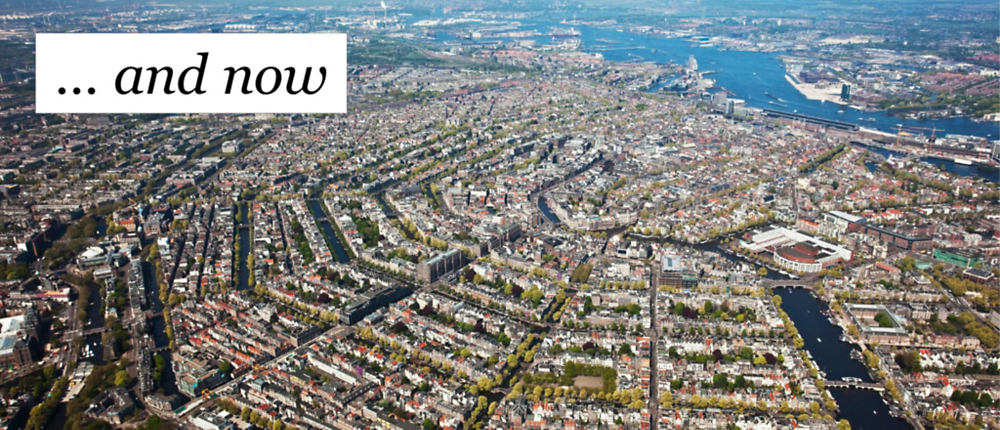
Today, exploring the waterways—whether by walking along the bridges or cruising on a boat tour—remains one of Amsterdam’s most popular activities for locals and visitors alike. Tour guides delve into the irrevocably intertwined histories of the canals and the city itself. Many of the city center’s original houses are still standing, some of which have been turned into museums including the FOAM photography museum, the Anne Frank House, and the Van Loon art museum. The “Nine Streets” neighborhood, full of boutique shops, art galleries, and cafes, crosses some of the canals as well and is considered one of the city’s many gems.
Explore Amsterdam’s canals on a small private boat tour during Essence of Europe: the Netherlands to Switzerland.


