We have never seen John’s overstuffed bookshelves, but we have seen his cubicle and suspect his home looks nothing like this.
We have never seen John’s overstuffed bookshelves, but we have seen his cubicle and suspect his home looks nothing like this.
Editor’s Note: If you’re a regular reader of our Inside Scoop Travel Trivia, you’ve likely encountered the words of John Bregoli, who has been writing for O.A.T. and suggesting books to our travelers for more than 20 years. We asked our most voracious reader to share a few favorites inspired by his travels.

Choosing books to review for travelers over the past 20+ years has been easy—they’re the same ones I choose for my own reading. When you read three or four books a week, fiction and non-fiction alike, there’s always something that points to a destination somewhere in the world. I know people have different tastes, of course, and some aren’t interested in pleasure reading at all—although it’s difficult for me to grasp why anyone planning to visit, say, the Panama Canal wouldn’t want to read David McCullough’s The Path Between the Seas first.
Why limit yourself to Lonely Planet and Eyewitness Guides? They’re excellent resources, and I might bring one along, but I feel more immersed in a destination with Agatha Christie’s Death on the Nile in Egypt, Haruki Murakami in Japan, or Andrea Camilleri’s Inspector Montalbano in Italy. Fiction or non-fiction, serious or fun, the right book can inspire you to explore a new place and deepen the experience once you’re there. But whether you go or not, I’m going to read it anyway ...
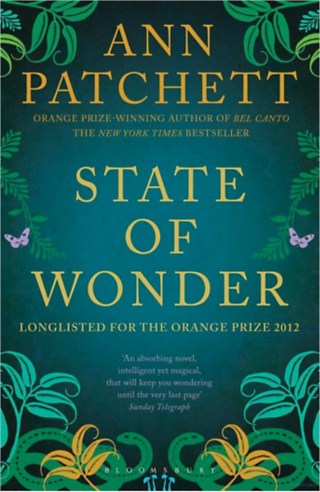
by Ann Patchett
In Ann Patchett’s State of Wonder, Dr. Marina Singh is chosen by the pharmaceutical company which employs her to fly to the Brazilian Amazon. She is meant to learn how a co-worker, Anders, died and, if possible, to bring his body home. Her boss also wants her to discover what has happened to Anne Swenson, a mysterious and talented scientist whose research could change the world and make the company millions—except that Swenson never returns with the results, which means the entire project may come to nothing.
The adventure that ensues is both intimate in emotion and almost epic in scope, as Singh heads further and further into the dense jungle, trailing one of Patchett’s most memorable characters, the missing Swenson, who has (as far as the company knows) been pursuing “the Lost Horizon for the ovaries,” a treatment that will yield endless fertility. In truth, she has been closely guarding her real mission (which readers, like Singh, will discover late in the novel). Singh not only finds Swenson, but other scientists, an unknown indigenous tribe, and a boy who has been taken from his people in another part of the rainforest. Immersed in a network of interconnected lives completely unlike anything she has before experienced, Singh finds herself falling under the spell of the Amazon to the point that, like Swenson, she is in no hurry to complete her original mission.
Patchett trusts her readers to navigate a thicket of moral and ethical questions, including just what constitutes defensible behavior when humans have been pressed into extraordinary circumstances. The ending hinges on a stunning turn of plot of which not all readers might approve. Without divulging too much, Patchett must walk a fine line here between wisdom and sentiment, a path she treads carefully and well. The end result is a book brimming with humanity and heart, even as it takes a hard look at nature’s ability to challenge and surprise us at every turn.
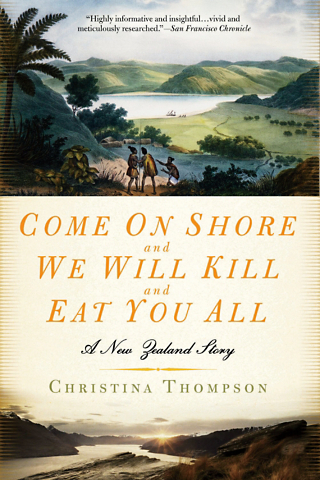
By Christina Thompson
First, let’s get the title out of the way. “Come on shore and we will kill and eat you all” were the words spoken to Captain James Cook by Indigenous Maoris when he tried to land the HMS Endeavour in New Zealand. But lurid tales of slaughter and cannibalism are not really what this book is about—although I was glad to see that it does get covered.
Christina Thompson offers a highly readable blend of history and memoir about New Zealand. A Boston native, she visits in the 1980s, meets a Maori man named Seven, and eventually marries him. No, not Seven as in Mickey Mantle’s jersey number from that Seinfeld episode, but because he was the seventh of ten children.
Their relationship becomes the personal thread running through a broader account of European contact with the Maori—often brutal, often confused, and frequently disastrous. Thompson covers Abel Tasman’s 1642 arrival, Cook’s later voyages, and other encounters that rarely ended without confrontation or loss of life.
She also delivers fascinating details on Maori customs, European fantasies of the “Noble Savage,” and the London sensation caused by Omai, a tattooed Polynesian visitor who charmed society in 1774. That story neatly mirrors the way Thompson sees Seven perceived when the couple returns to America.
At the end, Thompson and Seven are living near Boston with their three sons—and while the boys have Maori names, they are not called One, Two, and Three.
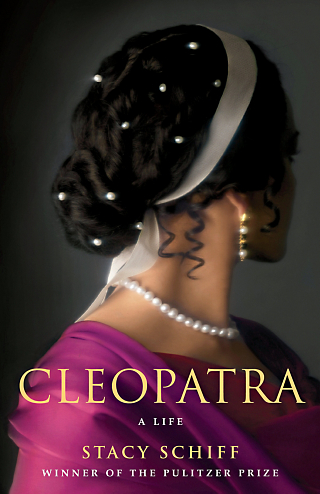
By Stacy Schiff
Most of us know the basics about Cleopatra. Beautiful queen of Egypt, lover of Julius Caesar and Mark Antony, suicide by asp. Check, check, check. But in Stacy Schiff’s scholarly—and brilliantly entertaining—biography, almost everything we think we know is wrong.
For starters, Cleopatra wasn’t Egyptian. She was a Greek Macedonian descended from the Ptolemy dynasty—“about as Egyptian as Elizabeth Taylor,” as Schiff puts it. The beauty myth is shaky, too. We have little idea what she looked like, though coins suggest a profile that bears no resemblance to Elizabeth Taylor.
So where did all the misinformation come from? “Her history was written by her enemies.” Schiff shows how Cleopatra’s intelligence was reduced to seduction because it was easier to credit a woman’s success to beauty than brains. In reality, Cleopatra was highly educated, fluent in several languages, politically shrewd, financially astute, and quick-witted.
She became queen at 18, ruled from spectacular Alexandria, and secured Rome’s attention first through Julius Caesar—famously smuggling herself into the palace in a sack, not the carpet of legend. What an entrance! Later came Marc Antony, whose doomed alliance with Cleopatra led to defeat by Octavian at Actium and to both their deaths.
Schiff restores Cleopatra as “a strategist of the first rank”: canny, capable, opportunistic, and far more interesting than the legend. Cleopatra—A Life is both a richly rewarding historical read and asp-kicking entertainment of the highest order.
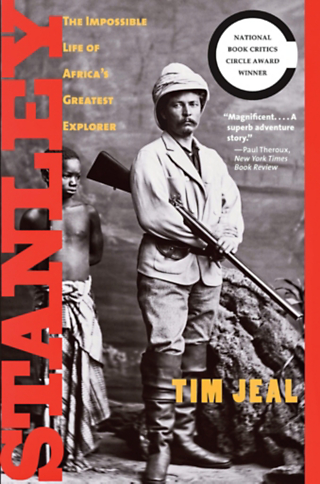
By Tim Jeal
To say history has been unkind to Henry Morton Stanley is an understatement. He is still remembered as the most brutal of Victorian explorers, accused of racism, violence, and crimes against humanity. Tim Jeal’s meticulously researched biography gives us a very different man—though it is disappointing to learn Stanley probably never said, “Dr. Livingstone, I presume?”
Born John Rowlands in 1841, Stanley was the illegitimate son of a poor Welsh woman who rejected him. At 17, he sailed to America, reinvented himself, and later went to Africa in search of fame—and perhaps a father figure. His “rescue” of David Livingstone in Tanzania began as a newspaper stunt for the New York Herald, but it made Stanley famous and turned Livingstone into a legend.
Stanley’s real achievements were immense. On an epic journey begun in 1874, he helped establish the true source system of the Nile and later mapped the Congo across some of the harshest terrain imaginable. Fever, starvation, and conflict shadowed the expeditions.
So why the terrible reputation? Jeal argues Stanley’s own embellishments hurt him. Newly available family journals suggest he loathed slavery, deplored violence, and showed more concern for Africans than many contemporaries. Jeal also suggests Stanley was later tarnished by association with King Leopold, whose atrocities in the Congo came after Stanley had left Africa for good.
History gives Livingstone the halo, but it is Stanley, I presume, who still deserves incredulity and awe.
By Vicki Croke
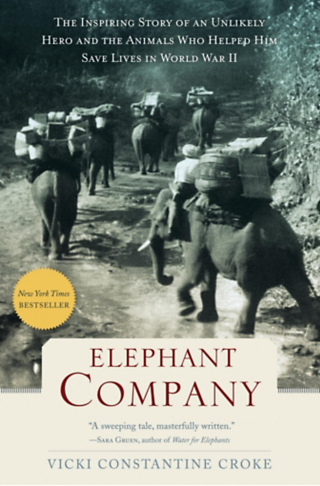
If you’re skeptical about an elephant’s capacity for mirroring human emotion, Elephant Company may put those doubts to rest. Yes, it’s a gripping true-life adventure about “an unlikely hero” and animals who helped save lives in World War II—but really, it’s about the enduring bond between Lt. Col. James Howard Williams, soon known as “Elephant Bill,” and his working elephants, especially a magnificent tusker named Bandoola.
Williams arrived in colonial Burma in 1920 to work for a British teak company and knew next to nothing about Asian elephants. He learned quickly. After the elephants hauled teak logs through the jungle by day, he followed them into the forest at night to study their social rituals. Eventually, he became something like an elephant whisperer—and a remarkably skilled large-animal veterinarian.
His bond with Bandoola was immediate, and Williams came to believe he understood the elephant “as a fellow-creature closer than many human beings.” The trust he earned from his elephants is the heart of the book, from their willingness to undergo painful treatments to one wounded elephant essentially presenting herself for care.
War catches up in the final chapters, when Japanese forces invade Burma and Williams’ knowledge of jungle paths and waterways becomes invaluable. His elephants build bridges for the British Fourteenth Army, with Bandoola as his “No. 1 war elephant.” An elephant’s memory is just one more mythical trait confirmed by Elephant Bill—and Elephant Company is a story you won’t easily forget, either.
By Kurt Vonnegut
Released after Kurt Vonnegut’s death in 2007, Armageddon in Retrospect collects previously unpublished stories and essays about war and peace. But mostly, they’re about war.
The book opens with a remarkable three-page letter Vonnegut wrote to his family in May 1945, while stationed at a U.S. Army repatriation center. In plain language, the young soldier describes the event that would haunt him for the rest of his life: the bombing of Dresden. “On about February 14th,” he writes, Allied bombers “destroyed all of Dresden—possibly the world’s most beautiful city. But not me.”
Vonnegut had been captured by the Germans near the end of World War II and sent with other American POWs to Dresden, then believed to be an “open city.” He survived because he was in an underground meat locker in a slaughterhouse when the incendiary bombs created a firestorm that leveled the city. Afterward, he and other prisoners were forced to drag bodies from the ruins.
The most powerful moment comes in the essay Wailing Shall Be In All Streets, where Vonnegut reflects that he “would have given my life to save Dresden for the World's generations to come. That is how everyone should feel about every city on Earth.”
Those are pure Vonnegut words: humane, plainspoken, furious, and heartsick. So are the last words of the last speech he gave before his death: “And I thank you for your attention, and now I’m out of here.”
Perhaps reading State of Wonder will inspire you to explore the Brazilian Amazon on our new Brazil in Depth: Rio de Janeiro, Amazon Cruise & the Pantanal adventure.
Our Writers on Writers
We asked O.A.T.’s copy team about their favorite writerly pursuits from their travels.
Beat the Heat: Advice from O.A.T. Associates
Our advice on keeping cool, from choosing your destination to packing the right gear.
O.A.T. Outtakes: Our Funniest Traveler Photos
See a collection of our favorite funny traveler photos.
Get The Inside Scoop On...
Like what you see here? Receive weekly updates right in your inbox.
inside-scoopArticles In This Edition

Great Elephant Migration Comes to Boston

Literary Mishaps

Spring Awakenings: Top 10 Journeys for March-June 2027

These Books Take You Places: Reading Recs from our Resident Expert

Writing on the Walls: Languages and Stories Engraved in Time