
Aditya Singh isn’t just one of O.A.T.’s top-performing Indian Trip Experience Leaders—he also has a great-grandfather who was one of the first inductees into Lord Curzon’s Imperial Cadet Corps.
Our expert Trip Experience Leaders are residents of their respective regions, offering firsthand insights and bringing our travelers behind the scenes as they tread off the beaten path to have authentic cultural experiences with local people. To gain a deeper understanding of British colonial rule in India, its lasting impact, and the country’s fight for independence, we reached out to Aditya Singh—one of O.A.T.'s top-performing Indian Trip Experience Leaders.
From the "Golden Triangle" cities of Delhi, Agra, and Jaipur to the opulent majesty of the Taj Mahal, India is a land that enchants with its rich array of cultures, traditions, and diversity. However, woven into the very fabric of this ancient nation is a complex history—and, in the contemporary landscape, perhaps no chapter is more significant or influential than the period of British colonial rule known as the "British Raj."
The British presence in India began in 1600 with the East India Company, which gradually expanded its control through military conquests, alliances, and sweeping administrative changes. By the mid-19th century, the East India Company effectively ruled India on behalf of the British Crown. The turning point came with the Indian Rebellion of 1857, leading to the British government taking direct control and ushering in the British Raj era, which introduced various reforms but also perpetuated exploitation and subjugation. The Indian independence movement—led by figures like Mahatma Gandhi and Jawaharlal Nehru—eventually gained momentum in the early 20th century before the nation finally achieved independence in August 1947.
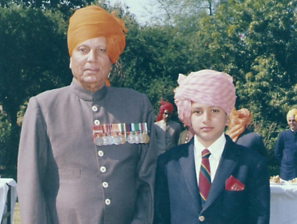
Aditya as a 12-year-old, attending a royal wedding with his grandfather.
One of O.A.T.’s top-performing Indian Trip Experience Leaders—Aditya Singh—has a family history that is deeply entangled with the British Raj's influence. My great-grandfather was one of the first inductees in the Imperial Cadet Corps started by Lord Curzon in 1904," he shared with us. "And my grandfather commanded an infantry unit in WWII."
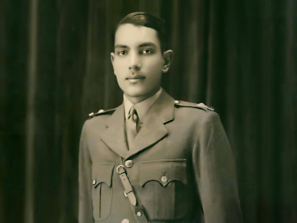
Aditya’s grandfather in uniform after being commissioned as an officer.
"I studied at a British-era boarding school called Mayo College, worked as a manager on coffee plantations established by the Scottish in the late 19th century, and lived in British bungalows and socialized at district clubs built by the British." In fact, Aditya told us that the plantation laborers used to address him as "Dhorai"—meaning "white man."
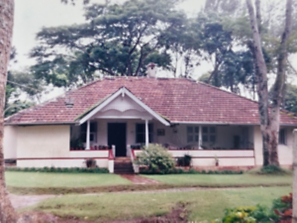
One of the British bungalows Aditya stayed in when working on a coffee plantation
Looking at the generational shift, Aditya observed, "I got to see whatever was left of the British Raj through my grandparents' generation. To them, speaking correct Queen's English was a sign of being 'well-bred.' Interestingly, when I see my children, the British influence has been replaced by the American one. 'Good evening' and 'good morning' have been replaced by 'What's up, bro?'"
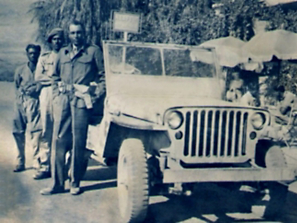
Aditya’s grandfather during his time in the service, standing alongside a Willys Jeep.
When asked about the most significant ways in which the British Raj continues to influence Indian society, politics, and culture today, Aditya pointed to the English language as a unifying force: "English is the common medium of communication amongst Indians as we have 26 different regional languages," he explained. However, he also noted that the British left a "festering wound" with the Partition of India and Pakistan, which still affects the nation today. "Our legal code and governance system are still pretty much the same as the British left them," Aditya added. "Our civil services still keep the common man at arm's length as the British used to—the 'sahibs' [a term used in colonial India when addressing or speaking of a European of some social or official status] are still here but they are not so fair anymore.
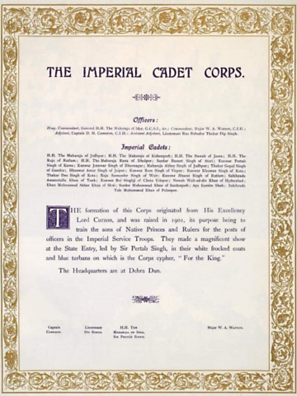
A certificate recognizing Aditya’s great-grandfather’s induction into the Imperial Cadet Corps.
Indeed, the legacy of the British Raj is not without its challenges, and Aditya emphasized the importance of unity and strength in the face of historical lessons: "The clear message from history is that if we do not stay united, identify first as Indians, and remain strong enough to defend ourselves, someone will take us over again," he asserted. He also pointed to the often-overlooked role of the United States in India's independence—noting pressures like Britain's war debt to the U.S. following World War II—as well as other key factors such as the victory of the Labor party in England and the Indian Navy rebellion. "It is historically incorrect to give all the credit to Gandhi and the Indian National Congress," Aditya added.
As India continues to grapple with the complexities of its colonial past, Aditya identified pressing issues that need to be addressed. "As a civilization, we are one culture but, politically, we are many kingdoms," he explained. "The idea of a single Indian nation comes from the British Raj." He noted that the average Indian's identity is still tied first to caste, religion, and region rather than being "Indian," which significantly impacts the nation's politics. "If—and when—this changes, political parties will not be able to divert voters' attention from development and good governance, and India would be a much more progressive nation."

"Selfie" taken by Aditya.
Additionally, Aditya acknowledged the lingering effects of colonial suppression on the Indian psyche: "The Indian civilization was suppressed by Muslim rulers and the British as well—what I call the 'white man's burden.' Indians still tend to view the 'white man' as superior, though this mindset is starting to change. Much more work remains to be done." When asked about whether there are any positive aspects of the British Raj’s impact, Aditya mentioned, "There were some good things done by the British during their rule, like the railways and modern education."
Reflecting on this period, Aditya mused, "I would like to have been born in the early 1900s. It was a time of exploration—there were unexplored parts of the Earth, untouched jungles, many undiscovered species. Cavalry was still relevant. It was a period of pomp and show. It was a golden time for those who had it good and horrible for those who did not."
Learn firsthand about the history of British colonial rule during our Heart of India adventure.
Get The Inside Scoop On...
Like what you see here? Receive weekly updates right in your inbox.
inside-scoopArticles In This Edition

5 Countries Never Colonized by Europe

The End—and Influence—of the British Raj: Exploring India's Path to Independence

Top 10 Destinations for History Buffs