
Let Bob regale you with tales of famous dogs, such as a Skye Terrier named "Bobby"—memorialized here outside an Edinburgh cemetery—and other beloved animals encountered during Scotland Revealed: Legends, Lochs & Highland Landscapes.
By Bob Brady, 22-time traveler from Braintree, MA
While walking in the southern edge of Edinburgh’s Old Town section, one comes across Greyfriars Kirkyard, a graveyard in use since the late 16th century. It achieved worldwide fame due to a tale of lasting loyalty between a dog and its master. Inside the cemetery’s main entrance is a large memorial to a Skye Terrier named "Bobby." As the story goes, Bobby was a stray who became the companion of John Gray, a local policeman. After Gray died, his faithful companion stood watch over his grave for the next 14 years until the wee dog passed away in 1872. The terrier’s loyalty became well known in the city and residents would provide Bobby with care and food and even purchase a license to avoid an unfortunate encounter with the dogcatcher. In 1961, Walt Disney Productions released a Technicolor motion picture, Greyfriars Bobby that furthered the fame of the Edinburgh canine’s enduring devotion. In addition to his kirkyard memorial, Bobby is featured on a bronze statue just outside the cemetery. It’s a popular tourist attraction and like others over the years, I and fellow O.A.T. travelers took part in the tradition of rubbing the dog’s nose for luck, an activity that has caused it to shine brightly on the otherwise darkened sculpture.
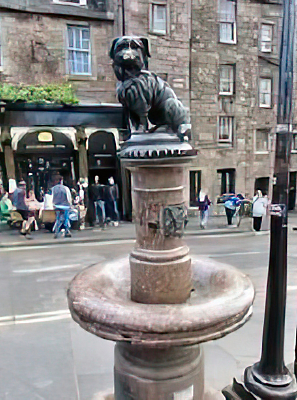
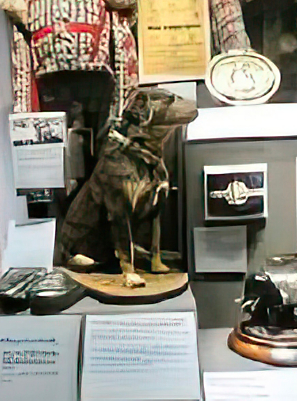
A tribute to the famous "Bobby", not to be confused with "Bob," who resides in a military museum.
There’s another famous dog in Edinburgh that went by the name of "Bob." That Bob resides in a glass case in the National War Museum at historic Edinburgh Castle. A castle visit was a popular part of the main trip’s itinerary. A mixed breed stray, Bob eventually became the regimental pet in 1853 of the First Battalion Scots Fusilier Guards, an infantry unit in the British Army. He accompanied the regiment to the Crimean War where he distinguished himself in battle to the extent of having his human comrades craft a special medal that was attached to his collar. Bob almost didn’t make it to the war zone as his presence was detected by an officer overseeing the loading of the troop ship. In the absence of a specific owner, the officer ordered Bob to be thrown overboard but the quick collective intervention by his mates saved him from that fate. Upon his passing in 1860, Bob was preserved through taxidermy and became a permanent part of the military museum’s artifacts.
Of Cats and Leopards
Led by a local guide, our tour of St. Andrews, a town better known as the "home of golf," led us past a statue of their famous resident cat, "Hamish McHamish." Although the ginger-coated feline was cared for by an owner, Hamish chose to roam the streets of the town from 1999 to 2014, receiving food, water and a friendly pat from locals, university students, and tourists. His wanderings became the subject of a popular book, Hamish McHamish of St. Andrews: Cool Cat About Town, leading to national and international fame and to his own Facebook following. In 2014, just prior to Hamish’s passing, a public fund raised £5,000 to erect a bronze statue of the popular cat, placed atop a stone plinth, similar in design to that of Greyfriars Bobby in Edinburgh. Hamish even made a brief appearance at the unveiling.
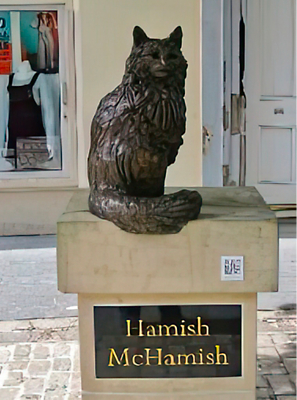
Statues of the beloved Hamish McHamish.
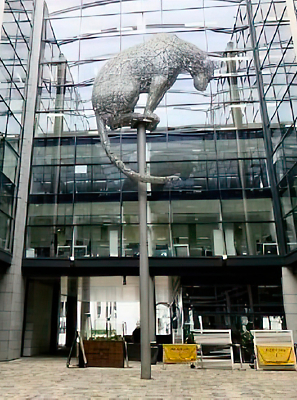
Aberdeen, Scotland’s Marischal Square is home to a two-ton, 16.5-foot steel sculpture of a leopard, sitting high on a 33-foot column. It was inspired by the "Granite City’s" coat of arms. Legend has it that James I, king of the Scots from 1406-1437, once gave two leopards to Aberdeen and the gesture resulted in their longstanding appearance on its official seal. When the city embarked upon a revitalization of the square, it commissioned sculptor Andy Scott to produce the piece, titled "Poised." Its style, resembling the massive "Kelpies" figures at the Helix in Falkirk, was not coincidental. Scott was responsible for that work as well.
…and More!
The Sumburgh Head Lighthouse, situated on majestic cliffs at the southernmost tip of Shetland, was constructed in 1821 by Robert Stevenson, the grandfather of famed author Robert Louis Stevenson. Since then, it has served as an important aid to navigation and once played a critical role in World War II. A wartime radar station there detected an incoming German air raid headed toward the base of the British Home Fleet and provided an alert that led to the repelling of a "Pearl Harbor-like" enemy attack. In addition, the site is home to a nature preserve featuring several seabird colonies. It’s a veritable marine birdwatcher’s paradise! The presence of 13 distinct species had been cataloged prior to our arrival. The most popular bird on the list was the Atlantic Puffin, sharply dressed in black and white and possessing a large multicolored beak. We were drawn to observation points near to their nesting sites and spent much of our allocated time closely viewing their comings and goings.
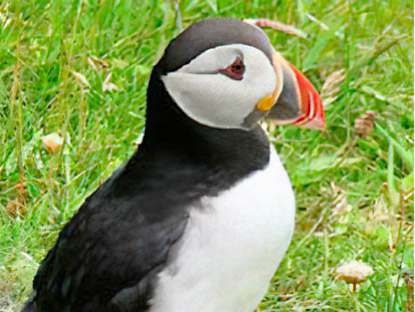
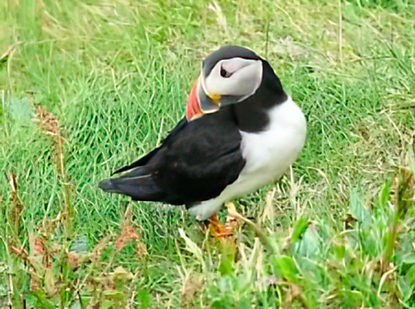
A puffin in his natural habitat.
Lastly, our trek to Loch Ness yielded results. We saw "Nessie!"
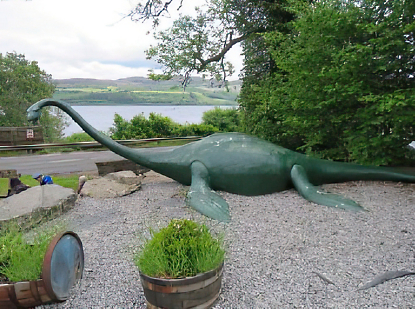
The mythical sea serpent, Nessie.
Seek out Scotland’s famous cats and dogs—as well as more well-known animals, such as Highland Cattle—during our Scotland Revealed: Legends, Lochs & Highland Landscapes adventure.
Get The Inside Scoop On...
Like what you see here? Receive weekly updates right in your inbox.
inside-scoopArticles In This Edition

11 Special Departures by Land, Sea, and River for 2025

Dogs in Hindu Mythology: Loyal Companions and Divine Messengers

Hairless Heirlooms

Leader of the Pack

Scotland’s Fabled Fauna: Canines, Felines—and More!