Anyone familiar with the Salem Witch Trials will hear familiar notes in this tale from Trip Experience Leader David Campbell’s YouTube series, "Astonishing Glasgow." Learn how the actions of one girl led to the conviction of six others in the Pollok Witch Trials—and read on to discover a spooky spot you can visit on Scotland Revealed: Legends, Lochs & Highland Landscapes.
By David Campbell, Scotland Trip Experience Leader
As a Trip Experience Leader on Scotland Revealed: Lochs, Legends & Highland Landscapes, I am always delighted to welcome my travelers to the city of Glasgow at the start of their tour.
Glasgow is an amazing city that you might not know very much about, but to me, it is also home.
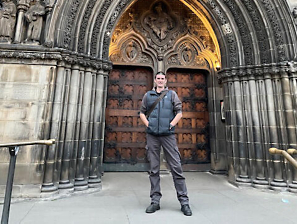
David Campbell, Scotland Revealed Trip Experience Leader and storyteller extraordinaire.
I was born in the city center, at a hospital called the Rottenrow maternity hospital. The building is no longer there but it qualifies me to be called a 100% Glaswegian through and through. As I love my hometown, I thought I would share some of its super history—and, in particular, its supernatural history in the approach to All Hallows Eve.
Glasgow had an interesting start as a city. The origins of the Glasgow that exists today began in the fifth century and, unlike many cities, it was not a castle, a royal palace, or a meeting of ancient roads that started Glasgow. The city grew around its monastery where, by the sixth century, our patron Saint Mungo was teaching Christianity to the masses.
The site of the monastery is now known as Cathedral Square. Glasgow Cathedral, which was built in 1131, housed the remains of St. Mungo in the crypt below—but more importantly for some of you, it was a filming location for the T.V. show Outlander and the upcoming Gillermo Del Toro film Frankenstein.
This being the oldest part of the city and so closely linked to its religious beginnings, it should be no surprise that occasionally, things around here go bump in the night.
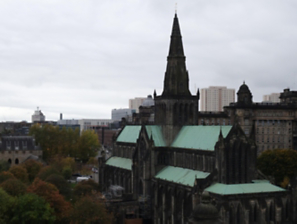
Glasgow Cathedral, looking appropriately spooky.
On the opposite side of the medieval High Street from the cathedral stands the Provans lordship, Glasgow’s oldest house and dating back to 1471.
Being so old, it is no surprise that the house has some residents that have never left. But when you hear its history, you will understand why this address has always been a hotspot for the supernatural.
The house was built in 1471 to accommodate the lord of Provan mill while he was attending the cathedral where city laws were administered. It is the only house of its kind to survive the reformation of the mid 1500s, when Scotland was taken from a Catholic country to one which follows Protestantism.
Almost every building relating to Scotland’s Catholic past was violently destroyed at this time by the followers of John Knox, but thankfully the house and the cathedral, the oldest on mainland Scotland, survived.
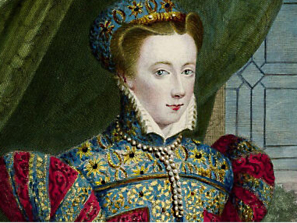
Does Mary Queen of Scots still roam the halls of Glasgow’s oldest house?
It survived the turmoil because by the 1500s, it was serving as a hospital. One of its patients was Lord Darnley, the second husband of Mary Queen of Scots, while he was suffering with syphilis. It is said that Mary herself was present in this building to help care for her husband, and some say she still wanders through the rooms.
By the 1600s the house had a new resident: the city’s executioner.
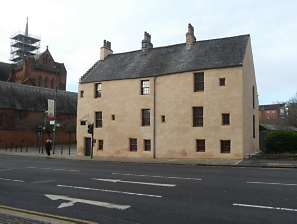
If the spirit moves you, you can visit the Provans lordship for free.
For many years, Glasgow had no executioner, and had to rely on the hangman traveling from Edinburgh. But this was expensive, and we Scots are not always known for spending money where it can be saved. It came to a head (if you pardon the pun) when the Edinburgh hangman charged Glasgow for his skills, accommodation, food, travel, and a substantial padlock before he would travel to Glasgow.
When asked what the padlock was for, he stated that it was to lock his wife in the house in Edinburgh, as she was a notorious drunk and could not be left alone. Different times.
The Provans lordship is now open to the public. Thanks to the Glasgow Life organization, a charitable arm of Glasgow city council, it is free to enter. So bring your proton packs, your garlands of garlic, and your sense of adventure and let O.A.T. show you more of Scotland’s ghosts and legends.
Listen for things that go bump in the night during Scotland Revealed: Legends, Lochs & Highland Landscapes adventure.


