
While exploring the Valley of the Kings in Luxor during O.A.T.’s new Timeless Egypt: Sailing the Nile adventure, don’t forget to look up.
While exploring the Valley of the Kings in Luxor during O.A.T.’s new Timeless Egypt: Sailing the Nile adventure, don’t forget to look up.
By Laura Chavanne, Editor, The Inside Scoop
Like many of us, I left my sun-worshipping days far behind in my youth. So I found myself in conflict with Ra, the sun god, in the Valley of the Kings. The limestone cliffs that surrounded me may have looked more lunar than solar, but the rays reflecting off the pale stone in all directions made me question Ra’s role as a giver of life—even in the early morning hours.
Please don’t be vengeful, Ra, I thought, fishing for my sunglasses when the parasol couldn’t compete.
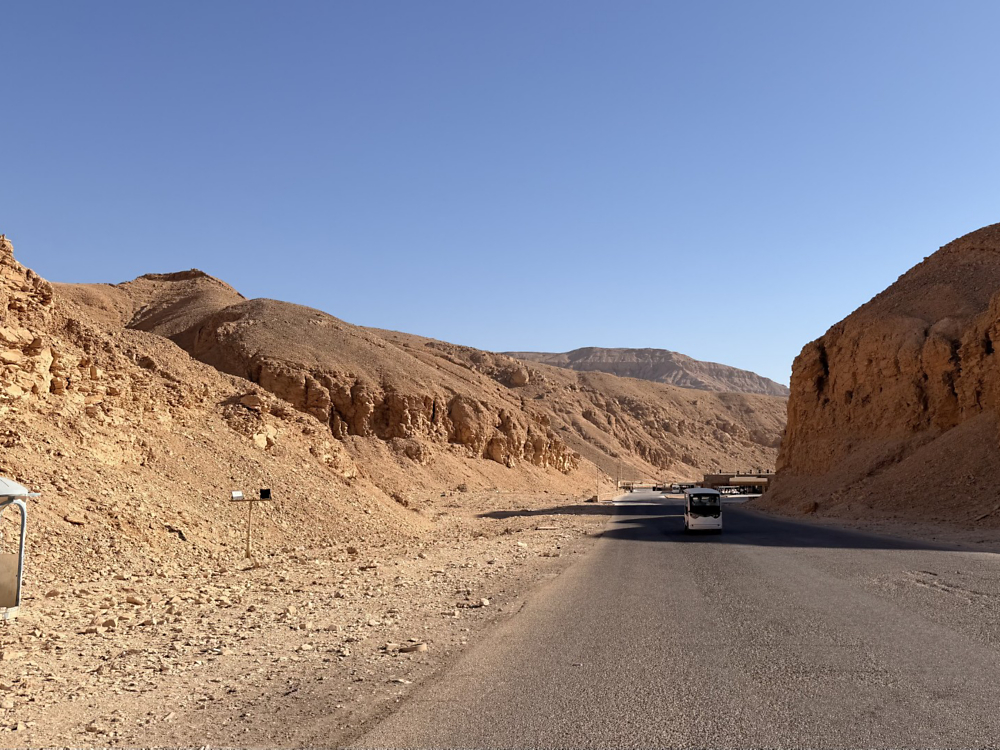
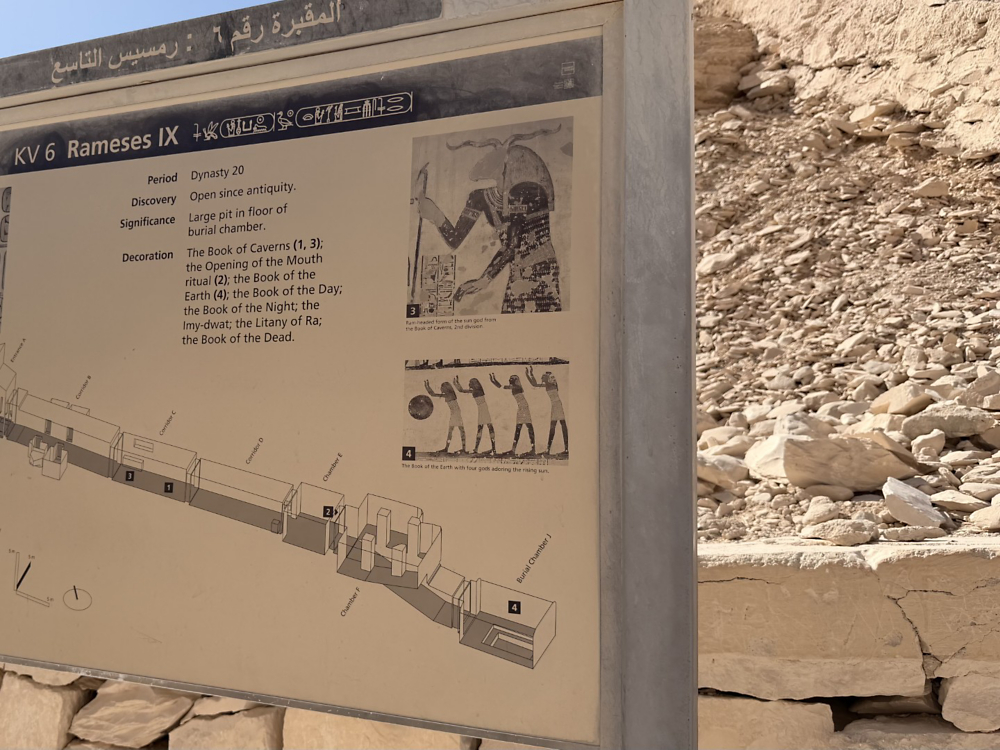
Our Trip Experience Leader, Medo, mercifully found shade as he explained the highlights of each tomb and recommended his favorites. Tut, obviously, topped everyone’s list—I looked forward to seeing his mummy even more than his treasures at the Grand Egyptian Museum the following day. But Medo also sold me on Rameses VI, or KV9. (The official alphanumeric designations made me feel like an archaeological insider despite this being far from the case.)
“It is a challenging tomb, but one of the most beautiful,” said Medo. And he reminded us of one thing: “Don’t forget to look up.”
While the scorching sun may have evoked the presence of Ra himself (no one looked up at that!), the Egyptians built the Valley of the Kings for precisely the opposite reason: the sun sets here on the west bank of the Nile, symbolizing death. They associated the east bank, where the sun rises, with life.
Despite my frustration with Ra as I juggled the parasol closure and sunglass removal at the entrance to each tomb, I had come to love how ancient Egyptians interpreted the sun. It evolved over time, but I generally understood that Ra—the falcon-headed god crowned by a solar disk—was separate from depictions of the disk itself, which visibly represented his power.
Or perhaps I didn’t understand at all. A few nights ago, at dinner, I had finally asked a nagging question: “Medo, was the solar disk seen as a being or an object? Was it sentient?”
Medo: “Yes… and no.”
I decided to leave it at that.
For the entire trip, I had tried to reconcile my real experience in Egypt with my imaginings as a child. I remembered grand exhibitions coming to Boston—the Ramesses the Great tour, when I was 10, with the 2.5-story colossus of the pharaoh reconstructed outside the Museum of Science. Even younger: Big Bird got trapped in a museum with a young pharaoh and helped him break a curse. And the mummy room at the Museum of Fine Arts remains my favorite. In Egypt, the real Egypt, I had to ask myself why.
I didn’t love my own answers: It felt dark, macabre, ominous—cool, sure, but undoubtedly focused on death. I could never separate the mythology from the people themselves; the ancient Egyptians, to me, may well have been gods of the underworld.
More than anything, Medo’s storytelling brought Egyptian mythology to life. It helped me imagine how the world appeared through the eyes of the ancients as they sought to understand and explain the forces of nature. One especially beautiful story involved Nut (pronounced “newt”), the goddess of the sky.
Depicted in many forms but most commonly as a woman covered in stars, Nut stretched her body across the cosmos and over her husband, Geb, who represented Earth. Nut swallowed the sun at night and gave birth to it every morning in an endless cycle of death and renewal.
As the mother to all cosmic bodies, she received spirits as they passed to the underworld, their souls transforming into the stars that decorated her form. Because of this, she frequently appears inside the lids of sarcophagi—and on the vaulted ceilings of tombs.
Having visited several temples along the Nile, we saw precious few examples of original painted color—just enough to help me imagine how the hieroglyphs and reliefs might have appeared in full glory. But then came the Valley of the Kings.
First, we paid respects to Tut. My husband and I audibly gasped at the colors on the walls, which remain impressively preserved due to the arid climate—and having been sealed off for thousands of years.
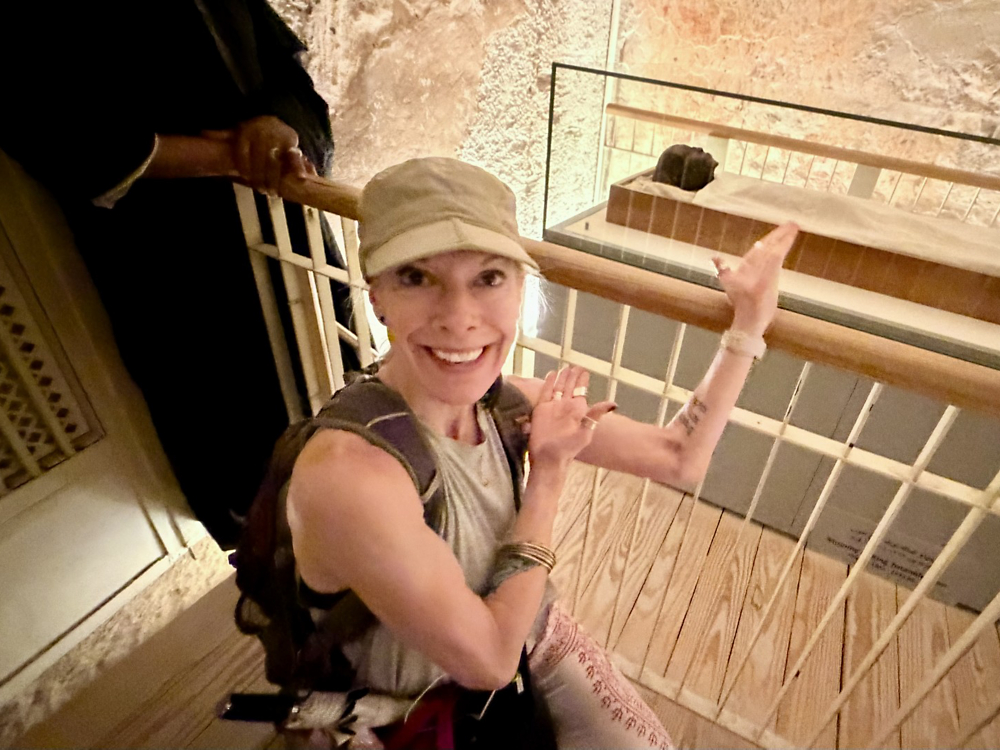
Tut himself lay in a climate-controlled glass chamber covered by a white sheet—disguising the fact that when Howard Carter and his team unwrapped the mummy more than a century ago, they infamously did not do so with care. The corpse had been decapitated and disarticulated, which Carter never mentioned in his official accounts. Some scientists give Carter the benefit of the doubt, suggesting he sought to preserve the dignity of the ancient king—or perhaps he knew his methods would spark outrage and simply covered them up.
Still, I appreciated the presence of his leathery remains, which seemed better suited here, in his final resting place, than in the Grand Egyptian Museum with his treasures. It helped me connect Egyptian mythology with the real humans who so passionately believed in eternity.
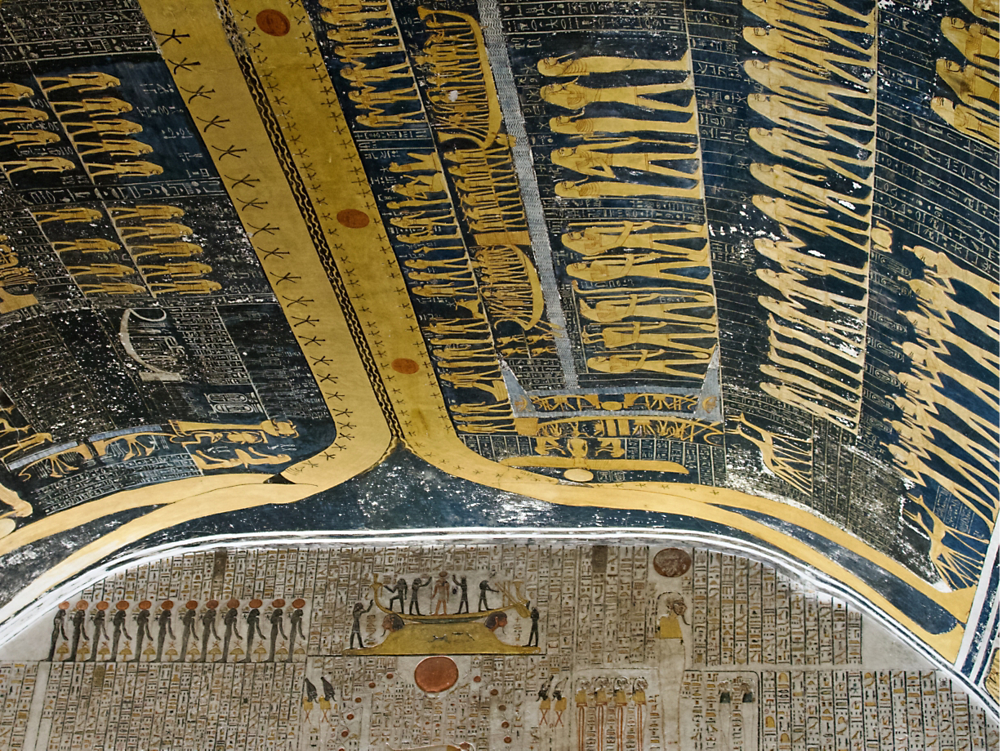
Unlike Tut, King Ramesses VI no longer resides in his burial chamber—KV9. His stone sarcophagus sits in shambles, damaged by grave robbers in antiquity. Priests had moved the mummy to a different tomb for safekeeping, where archaeologists discovered it in 1898.
If the king could possibly have foreseen the fate of his earthly body, would he have feared for himself in the afterlife?
Or had the cosmic cycle already been set in motion?
His death, after all, was just the beginning.
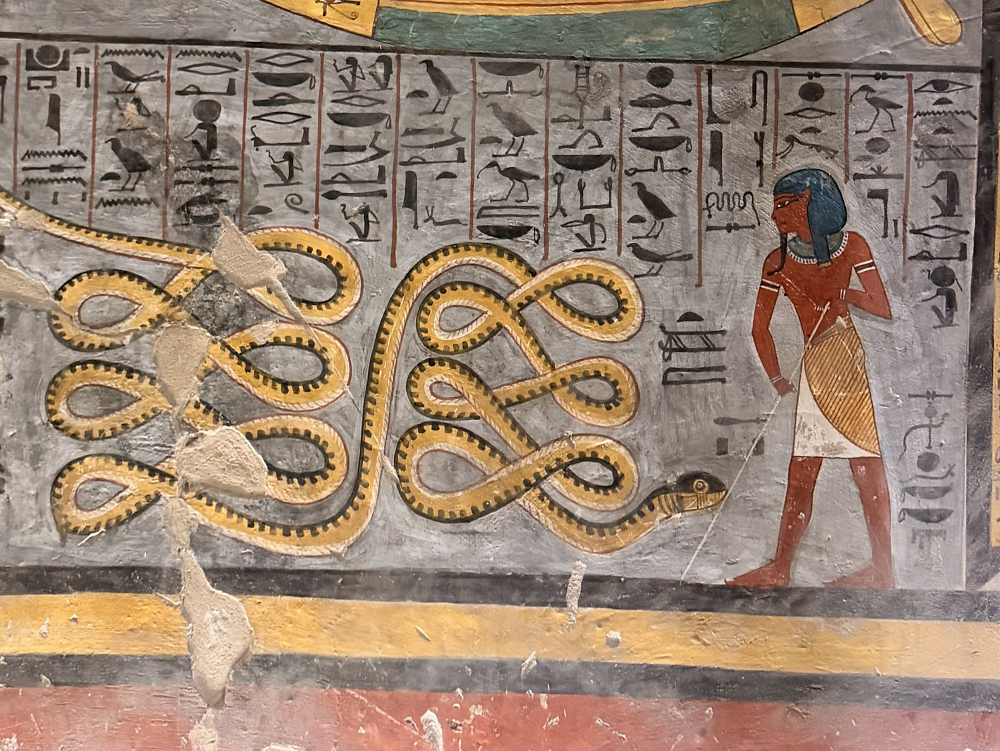
Surrounding the shattered sarcophagus, the walls depict scenes from the Books of the Earth, which show the nocturnal journey of the sun god as he passes through the realm of the dead. Every night, he battled against the forces of darkness to prevail for another dawn.
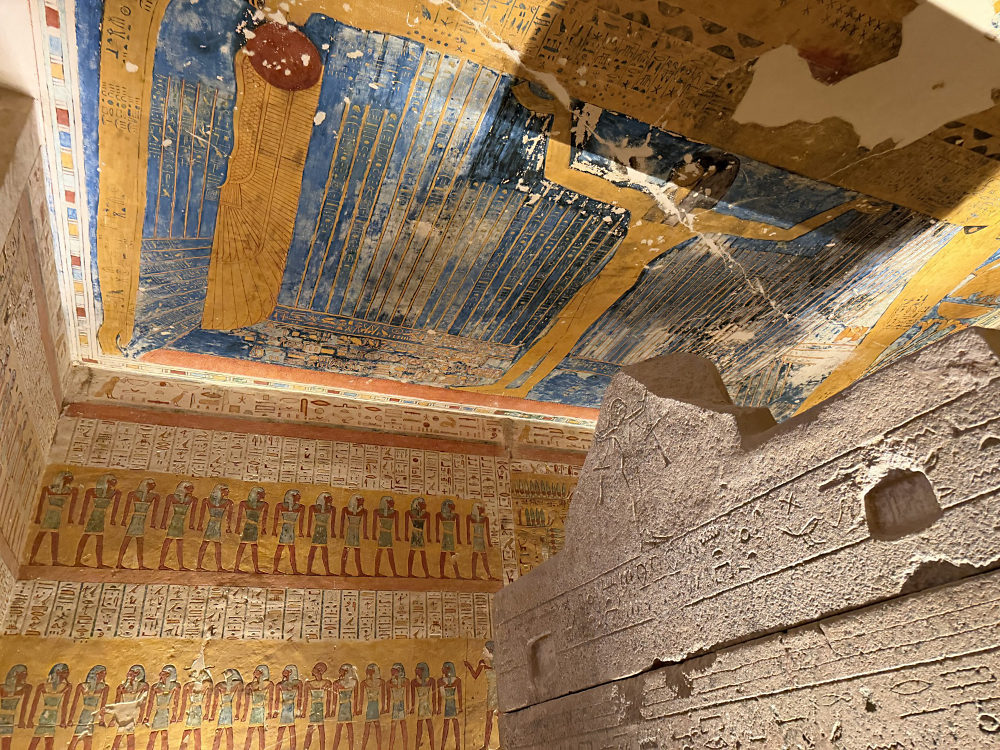
And above it all stretches Nut in vivid blue and gold: a double image, framing the Book of the Day and the Book of the Night. The stars that cover her body symbolize the souls of the deceased—the “imperishable” stars that never set, an honor reserved for royals.
As I write this, archaeologists are newly focused on an enduring mystery in the Valley of the Kings. They believe Nefertiti’s long-lost tomb may be hiding behind that of Tutankhamun, and are awaiting permission to explore further. Another imperishable star, continuing the cycle of discovery and understanding.
Beneath the spectacular ceiling of KV9, at the center of a king’s celestial journey, I reached an understanding of my own. Yes, much of Egyptian mythology is focused on death and darkness. But only through darkness can we truly appreciate the light. And just as Ra encountered demons each night, urging us not to take his resurrection for granted, the ancients did not see death as an end. Rather, it opened the door to a cosmic beginning … and an eternal cycle of renewal.
This belief unites humans across history, religion, and our seemingly infinite places on Earth.
And there, in a tomb, not a temple—a place meant to remain hidden in darkness for eternity—I felt the depth of ancient Egypt’s humanity. I had finally found the light.
Explore the Valley of the Kings during Timeless Egypt: Sailing the Nile.
Climbing to Khufu: Bending to Eternity Inside the Great Pyramid
Gloria braved the ascent to Khufu’s burial chamber within the Great Pyramid.
Egypt, the Sphinx and a Kiss
A miscommunication between this traveler and a local led to hilarious—and a little embarrassing—story.
“She Asked, I Followed”: A Mother-Daughter Journey to Egypt
A mother-daughter duo, including an O.A.T. associate, reflects on the power of family travel.
Get The Inside Scoop On...
Like what you see here? Receive weekly updates right in your inbox.
inside-scoopArticles In This Edition

Heavenly Valley

Heavens Above: 4 Ceilings Worth Looking Up For

Imperishable Stars: Finding Light in the Realm of the Dead

Martian Understudy

Top 10: 2027 Adventures with FREE Single Space Available